Topkapı Palace
Six centuries of empire: gates, courtyards, the Harem, and the relics, in the order you walk them.
Topkapı Palace: The Heart of the Ottoman Empire and the Crown of Grandeur
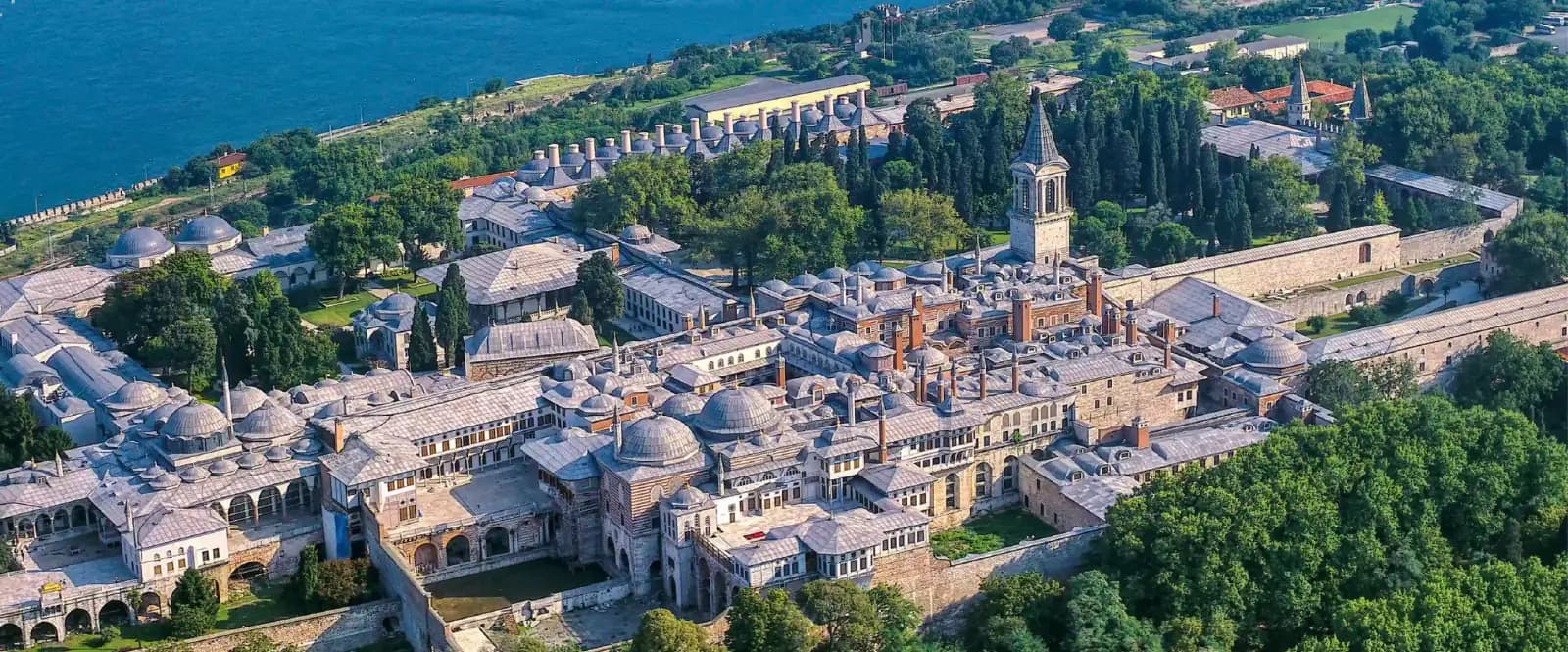
Located at the very tip of the Historical Peninsula, commanding views of the Bosphorus, the Golden Horn, and the Sea of Marmara, Topkapı Palace is not merely a complex of buildings; it is the administrative and residential center of a six-century-old world empire and a monument safeguarding history's most precious treasures.
Constructed after the conquest and serving as the residence for Ottoman Sultans for approximately 400 years, the palace possesses a unique historical depth defined by its architectural simplicity, administrative function, and the sacred relics it houses.
Historical Depth: The Center of the Empire
Construction of Topkapı Palace began in the 1460s by Sultan Mehmed the Conqueror, the conqueror of Istanbul, and the main structure was completed in 1478.
Four Centuries of Residence
The Palace served as the official residence of the Ottoman Sultans, the center of the empire's administration (Bâb-ı Âlî or "Sublime Porte"), and the training ground (Enderun) for nearly 400 years, until the construction of Dolmabahçe Palace in the mid-19th century.
A City Within a City
The Palace was not just a residence but a colossal city-palace complex comprising four major courtyards, the Harem, kitchens, hospitals, barracks, and archives, hosting tens of thousands of people.
Architectural Features: Functionality and Layered Grandeur
In contrast to European palaces, Topkapı Palace's architecture follows a horizontal spread plan, organized around successive courtyards and gardens rather than a single massive block. The palace is separated by a series of monumental gates and courtyards, each representing a different function and level of authority.
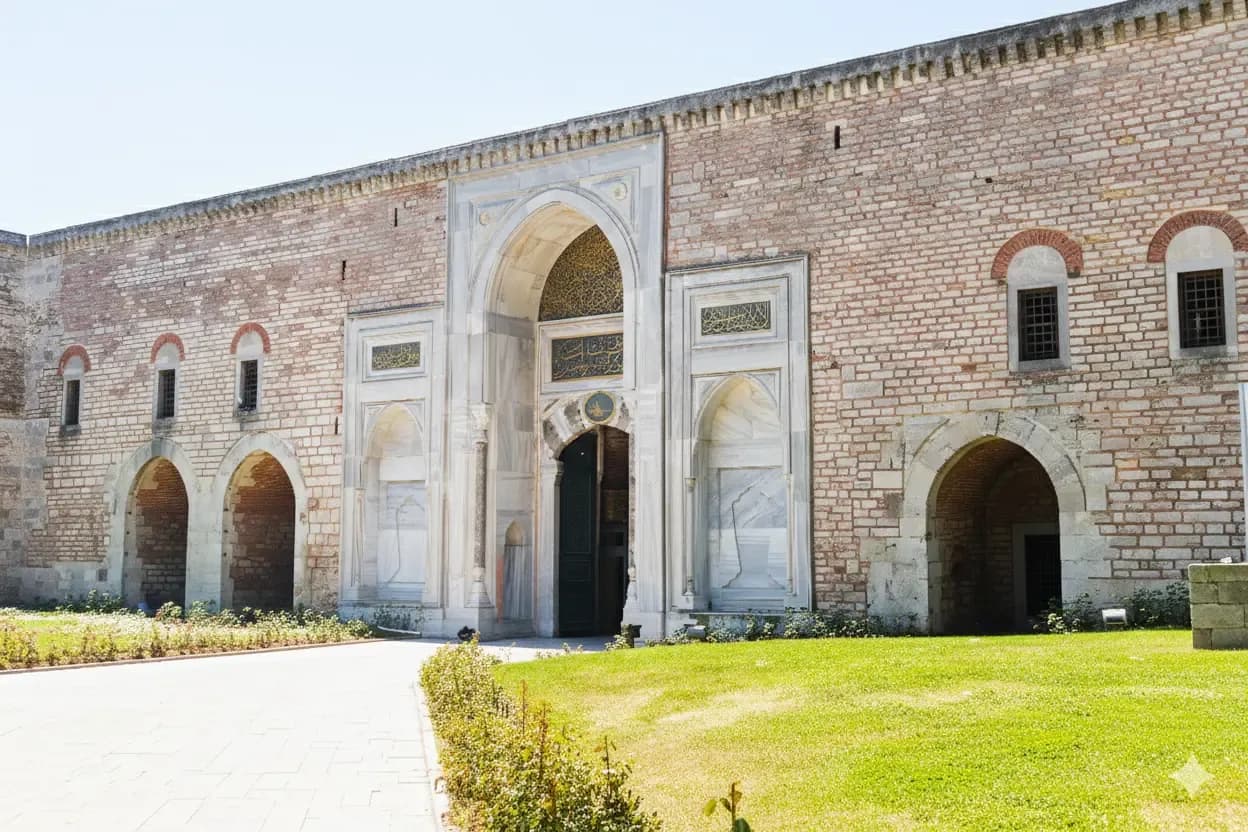
The Bab-ı Hümayun (Imperial Gate), or the Gate of Salutation, is the largest and most magnificent of the palace's eight main gates. It holds great value as the entrance to the greatest palace in Ottoman history. It was commissioned by Sultan Mehmed the Conqueror (Fatih Sultan Mehmed) as the main entrance to Topkapı Palace from the city. Entering the palace begins here.
On both sides of the Bab-ı Hümayun are small rooms reserved for the gatekeepers. Above the gate, there was a small, pavilion-like apartment built for Sultan Mehmed the Conqueror himself, which was unfortunately lost to a fire in 1866 and has not survived to the present day. After passing through this gate, you enter the First Courtyard.
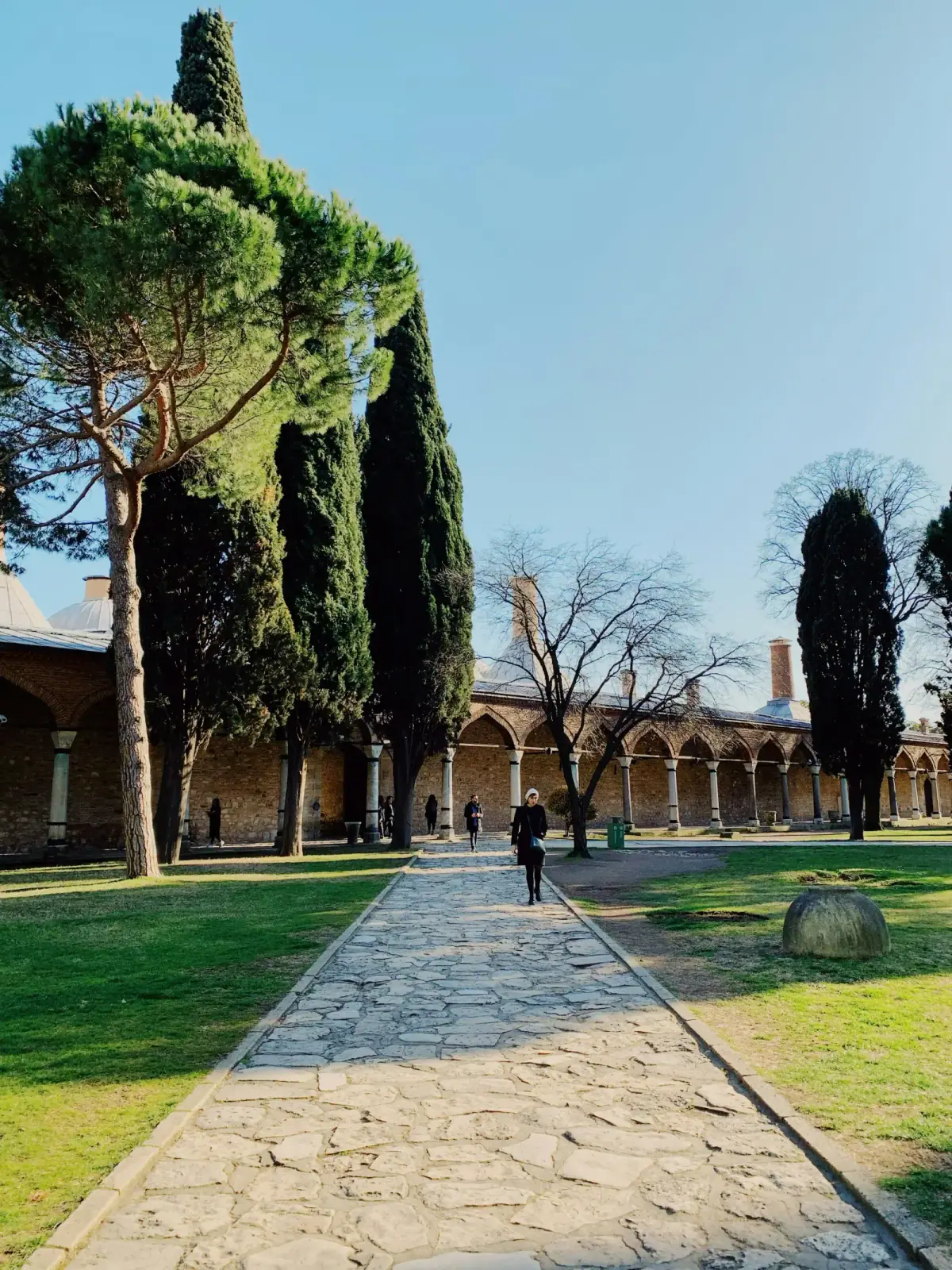
The First Courtyard (The Court of the Janissaries / Palace Square) is the largest square of the palace. The square served as a central area where the public could enter on specific days and conduct their affairs with the state. The 300-meter-long tree-lined road in the Palace Square, which was the only area state officials were permitted to enter on horseback, is renowned as the magnificent route through which the sultans passed for their accession ceremonies, campaigns, and Friday processions throughout history.
The square is bordered by important Ottoman institutions. The structures located in the Palace Square include the Imperial Mint (Darphane-i Amire), the hospital for the palace's external services, the wood warehouse, the bakery, the outer guardhouse, and the Hagia Irene Church (Aya İrini Kilisesi). The Imperial Mint was where Ottoman coins were struck, the equivalent of today's place for minting metal currency. Following the Mint comes the Gate of Salutation (Selam Kapısı).
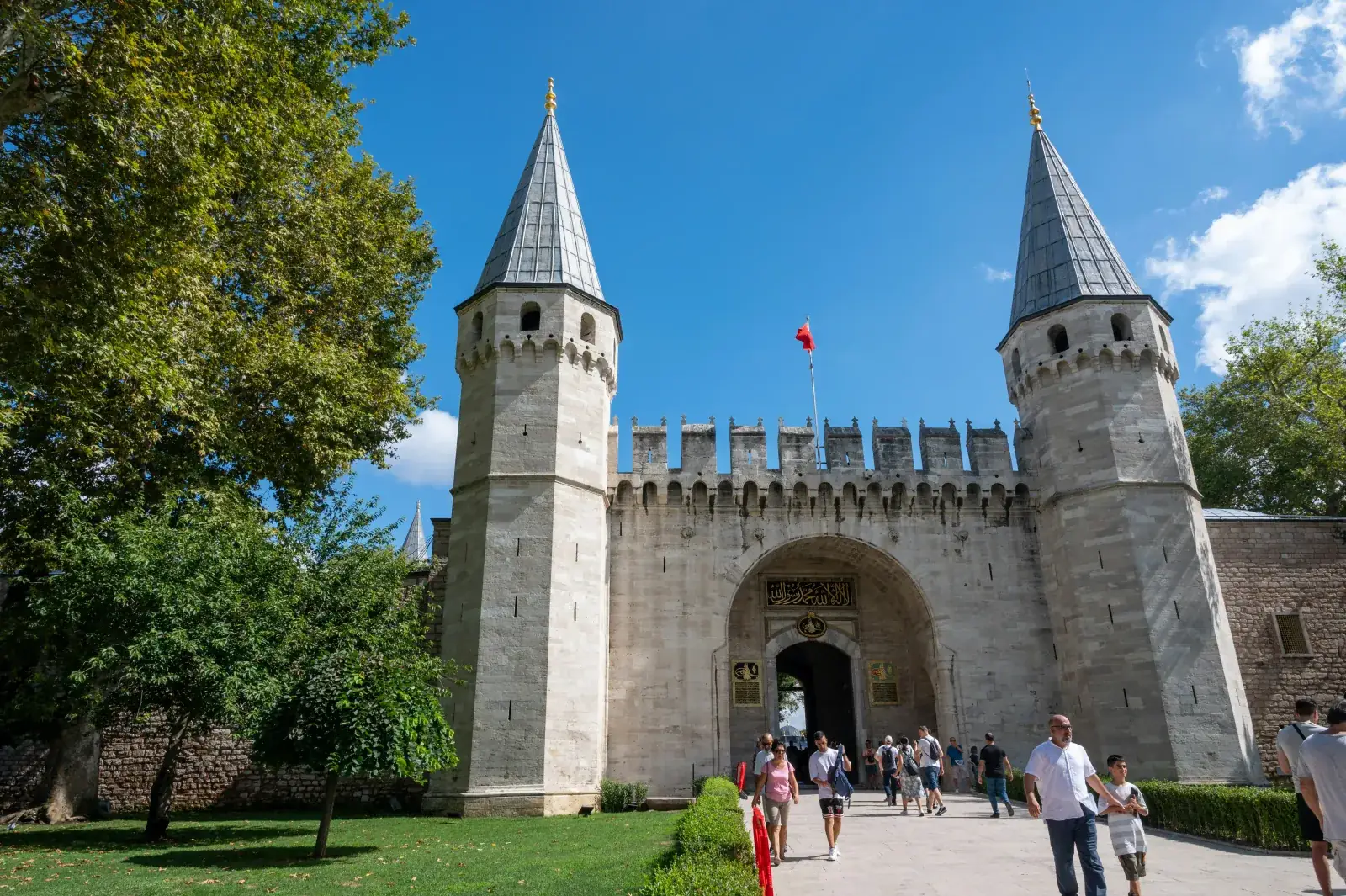
The Bâbüsselâm (Gate of Salutation) was built by Sultan Mehmed the Conqueror (Fatih Sultan Mehmed) in 1468. Resembling European castle gates with its two towers, the façade facing the First Courtyard features the Kalima-i Tawhid (Declaration of Faith), the tughra (sultan's signature) of Sultan Mahmud II, while the sides contain 1758 repair inscriptions and the tughras of Sultan Mustafa III.
The Ottoman Sultan would enter this gate on horseback. After leaving the Harem for prayer, the Sultan would mount his horse and, accompanied by the high-ranking statesmen waiting for him in front of the Bâbüsselâm, would set off for Hagia Sophia or the Blue Mosque (Sultan Ahmet Mosque). Following the prayer, the return to the palace would follow the same arrangement.
The gate reflects the classical elements of 16th-century Ottoman architecture. After passing through the Bâbüsselâm, you enter the Second Courtyard.
The Second Courtyard (Divan Square) was constructed during the reign of Fatih Sultan Mehmed (Sultan Mehmed the Conqueror) in 1465. Surrounding the square are the palace hospital, patisserie, Janissary barracks, the Imperial Stables (Has Ahırlar), and the Harem. To the north lies the Imperial Council Hall (Kubbealtı), where the Divan-ı Hümayun meetings were held, and to the south are the palace kitchens.
On the left, there are the notable Beşir Ağa Mosque, which draws attention with its Baroque arched windows and bay-window-shaped minaret, and the Imperial Stables (has ahırlar), where the horses of the Sultan and the palace community were kept. Further past the Imperial Stables lies the Harem.
To the right of the Second Courtyard, after the main entrance of Topkapı Palace, are the palace kitchens, recognizable by their domes and chimneys. The tour of Topkapı Palace typically begins with the palace kitchens and proceeds in order from there.
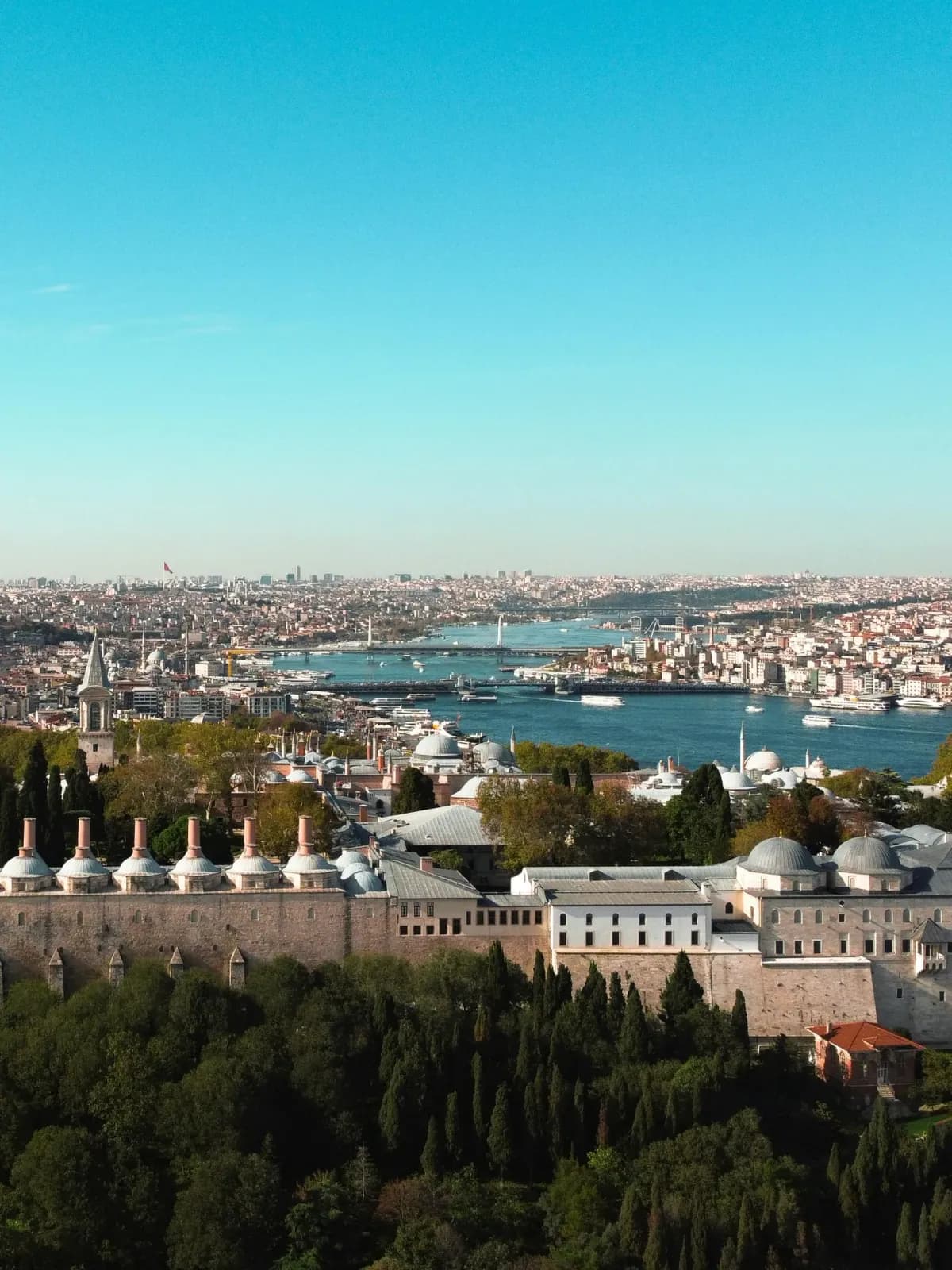
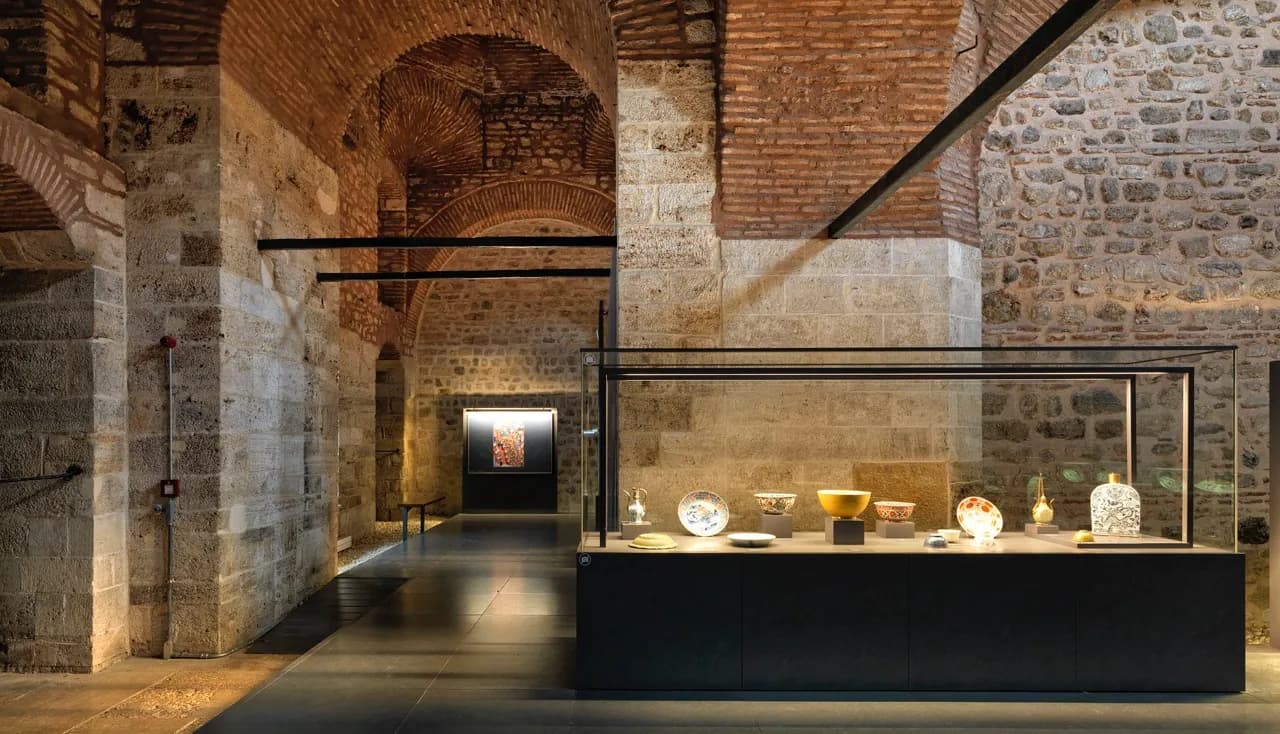
The Matbah-ı Amire (Imperial Kitchens) is the section where you can find the answers to all your questions if you are curious about where food came from to Topkapı Palace, how it was stored, cooked, and served, where the Sultan's meal was prepared, and with which utensils it was offered.
The palace kitchen, overlooking the Sea of Marmara and consisting of eight separate sections, can be entered through three main gates. With its three cooking sections, a pantry, a tinning house for retinning palace copperware, a mosque, a bathhouse (hamam), and barracks, along with two confectionery houses (helvahane), it resembled a large neighborhood. The kitchen staff, numbering up to 800, were responsible for providing food for approximately 4,000 people.
Inspired by the palace kitchen in Edirne, the Imperial Kitchens were built in the 15th century and were expanded by Sultan Süleyman the Magnificent (Kanuni Sultan Süleyman) due to the growing palace population. After being extensively damaged in the 1574 fire, the kitchens were repaired and reorganized by Mimar Sinan.
The Helvahane (Confectionery) section was added to the existing structure by Mimar Sinan during the reign of Sultan Süleyman the Magnificent. In the Helvahane, all kinds of sweets, jams, syrups, pastes, and sherbets were prepared here, and at one time they influenced Europe. The two-part, four-domed Helvahane, with its original counters and hearths, remains the only section to have survived to the present day.
Food was served not only to the palace community but also to the Janissaries, and to subjects of every religion and language who came to the Imperial Council (Divan) to present petitions, as well as to plaintiffs and witnesses. Food was also taken from here for some of the public soup kitchens (imarethane). The inventory of Ottoman palace culture is displayed here today.
The Topkapı Palace Porcelain Collection houses a world-famous, vast collection of Chinese porcelain preserved within the palace. A rich collection is exhibited, including celadon basins, ewers, and towels bearing the Sultan's tughra (monogram) that the Sultans used to wash their hands, alongside a re-enactment of the Sultans' classic table setting.
The display cases themed as Tableware feature over 10,000 pieces of palace porcelain. The porcelain was used by the dynasty, the palace, and its surroundings, primarily by the Sultans. The 'celadon collection,' consisting of 1,354 pieces that are said to change color upon contact with poisoned food, is the world's largest exhibition on this subject.
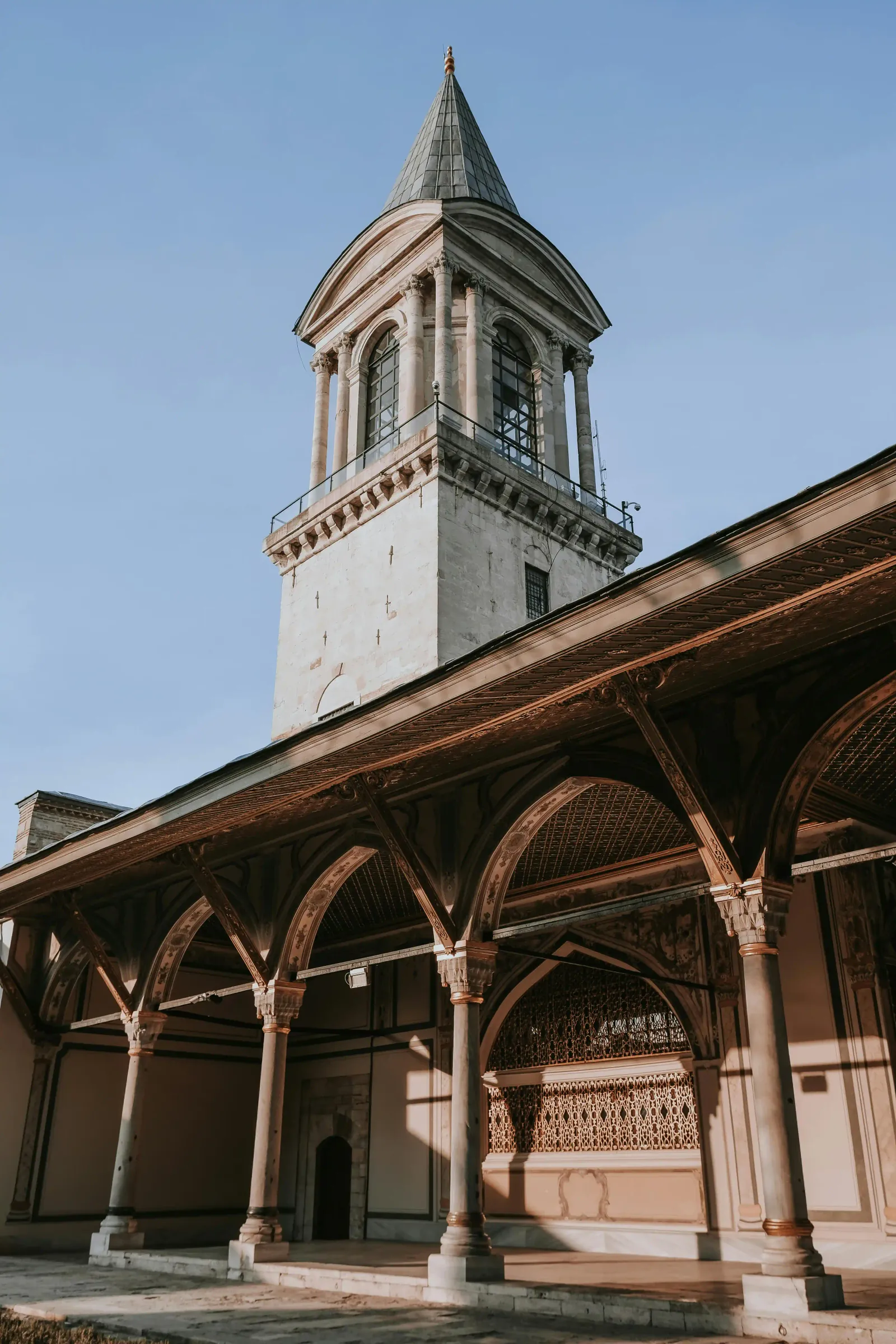
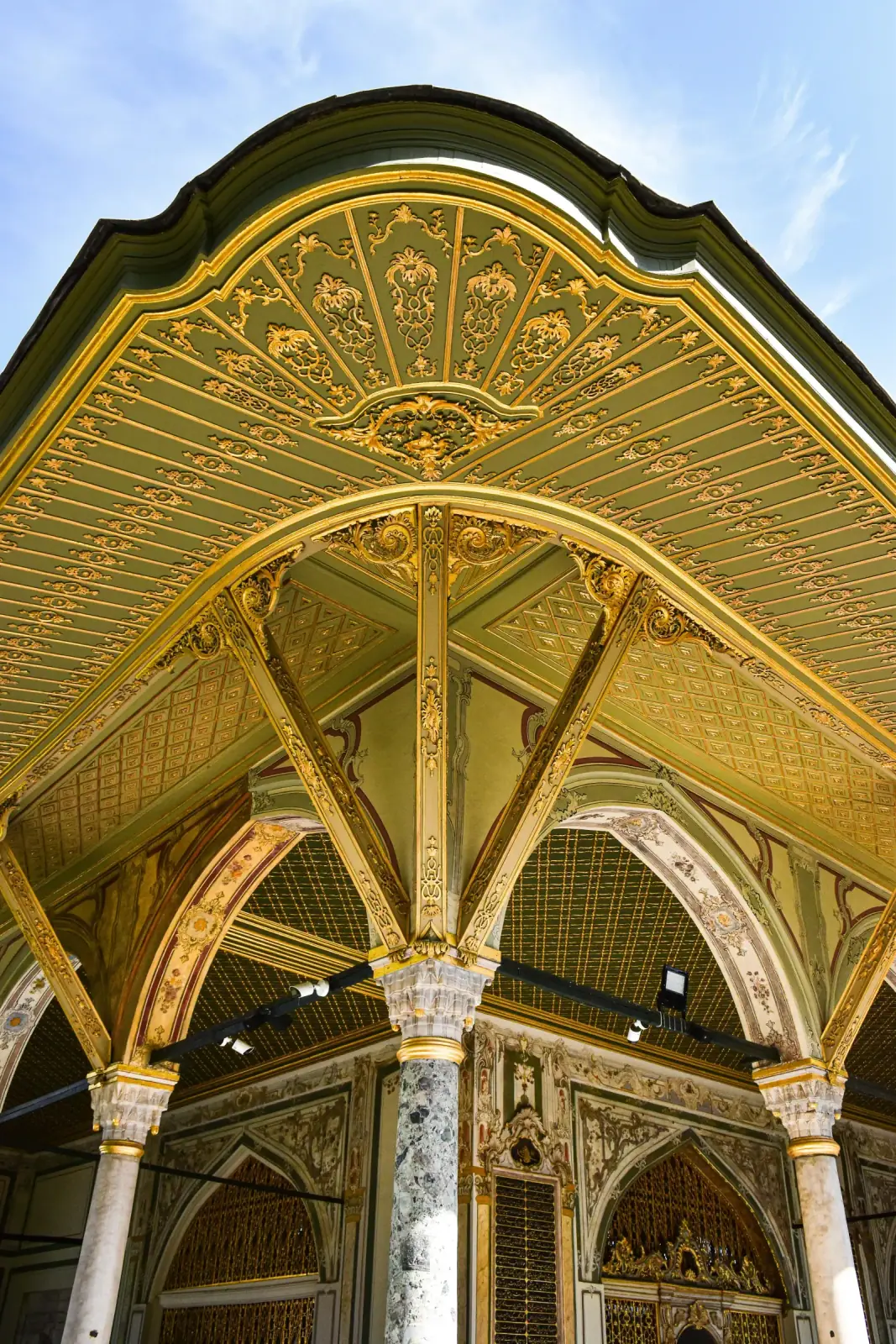
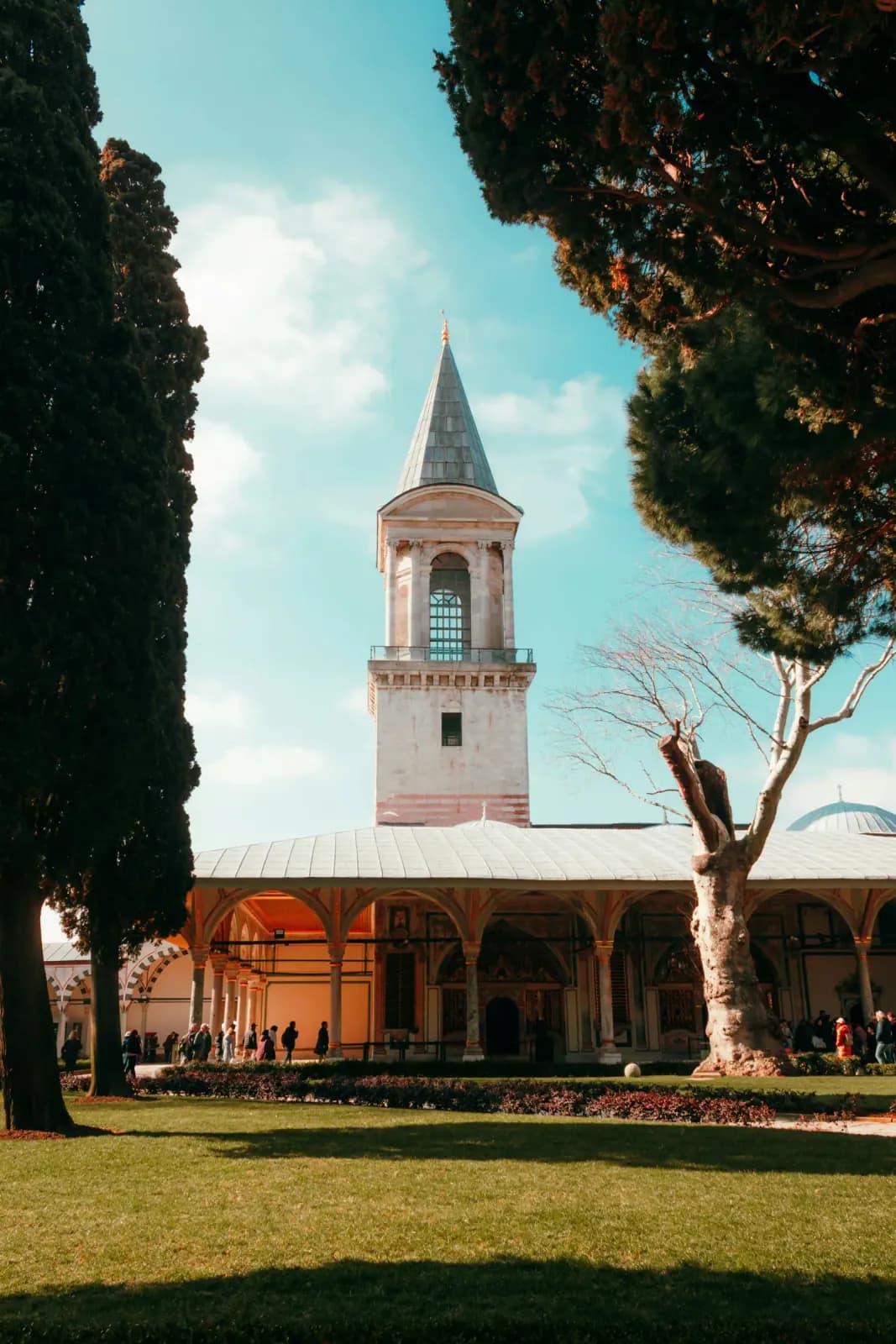
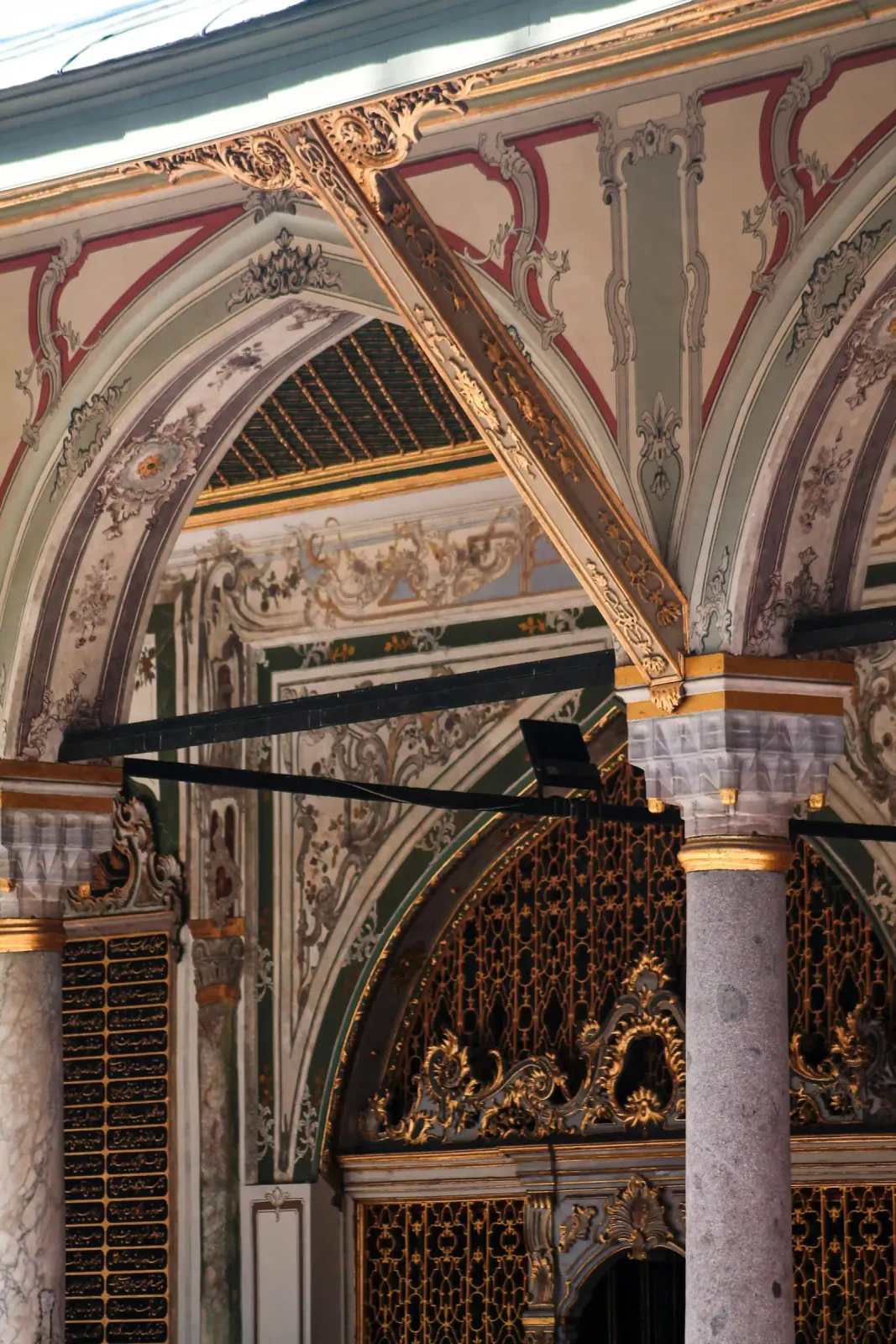
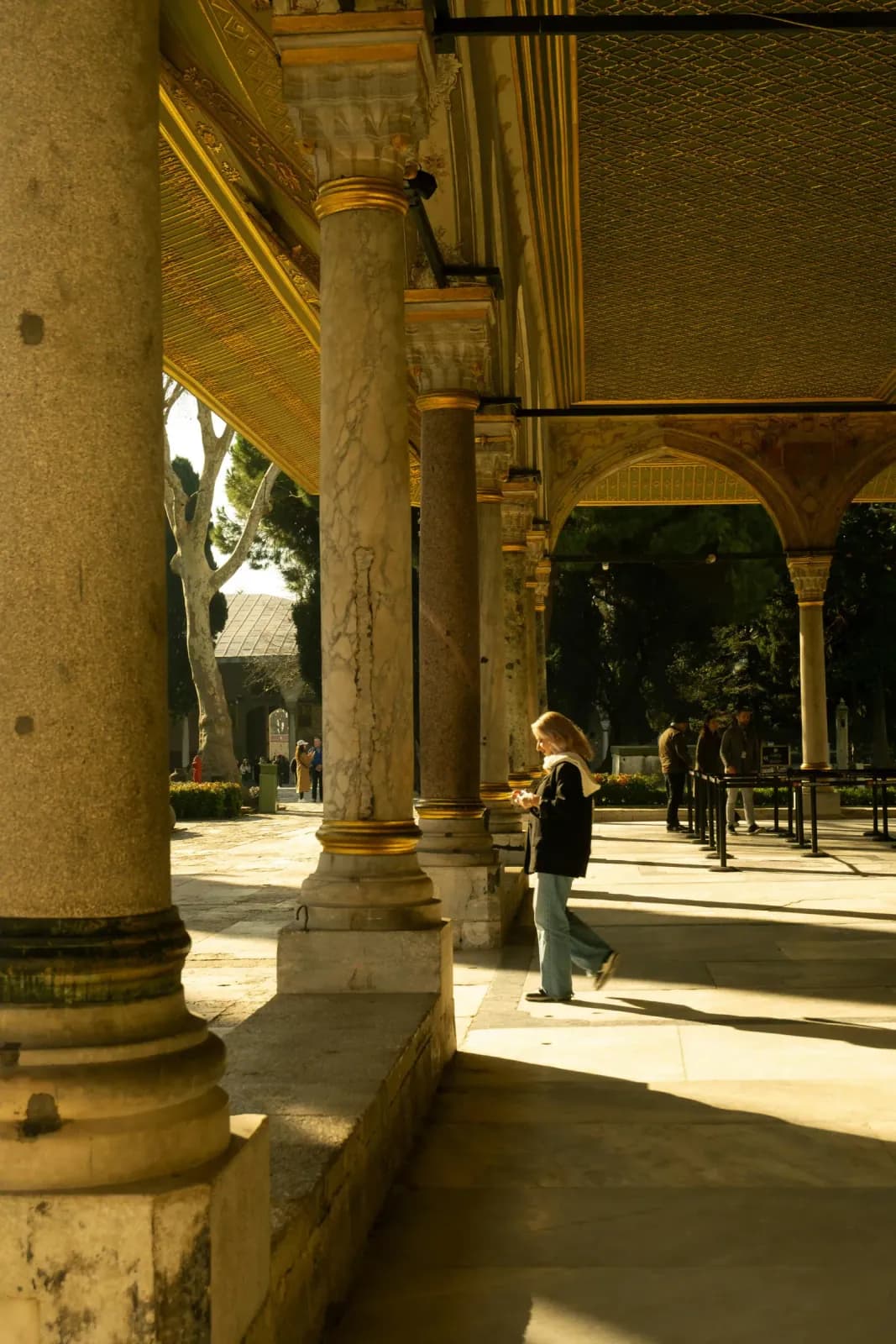
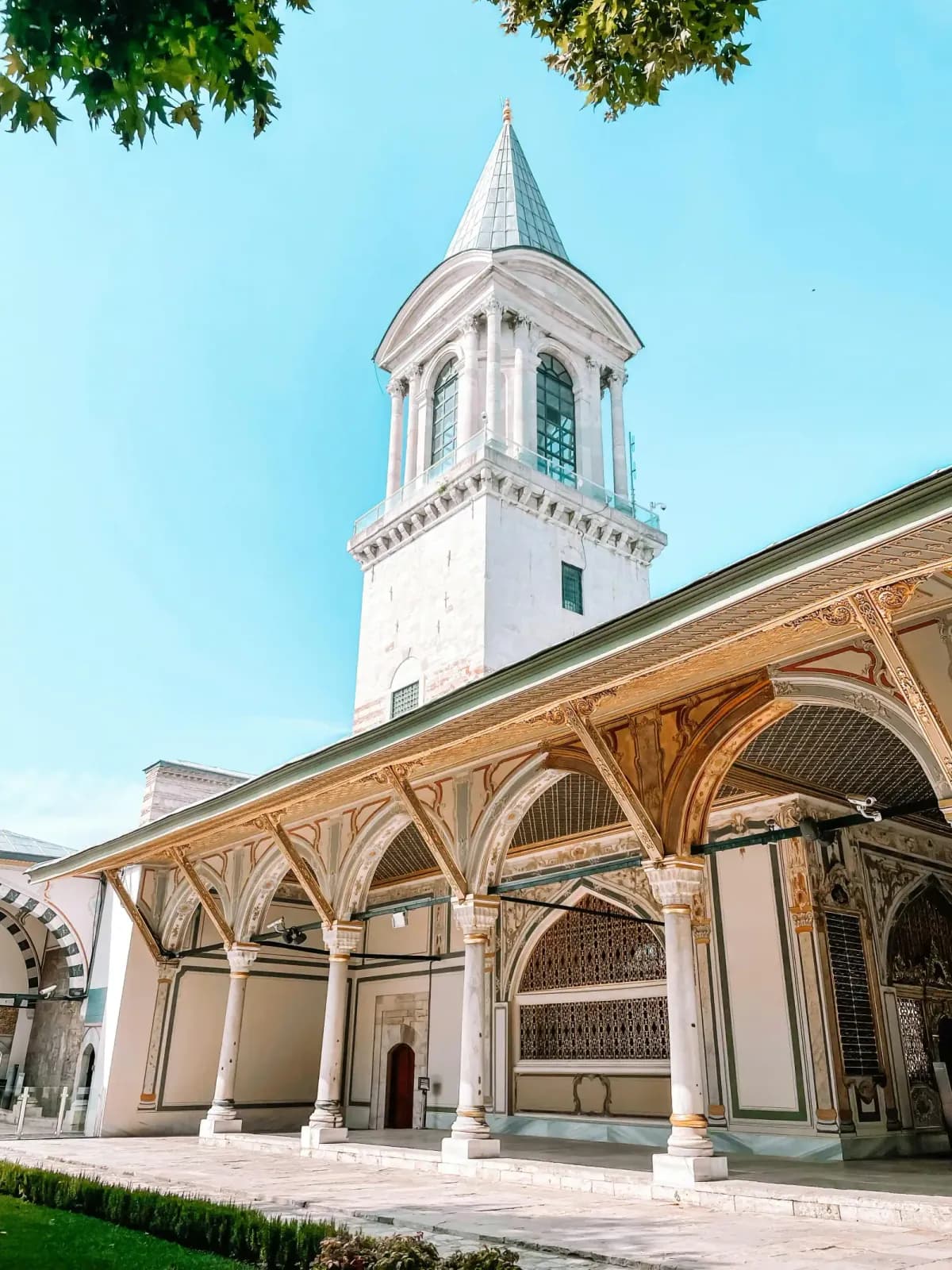
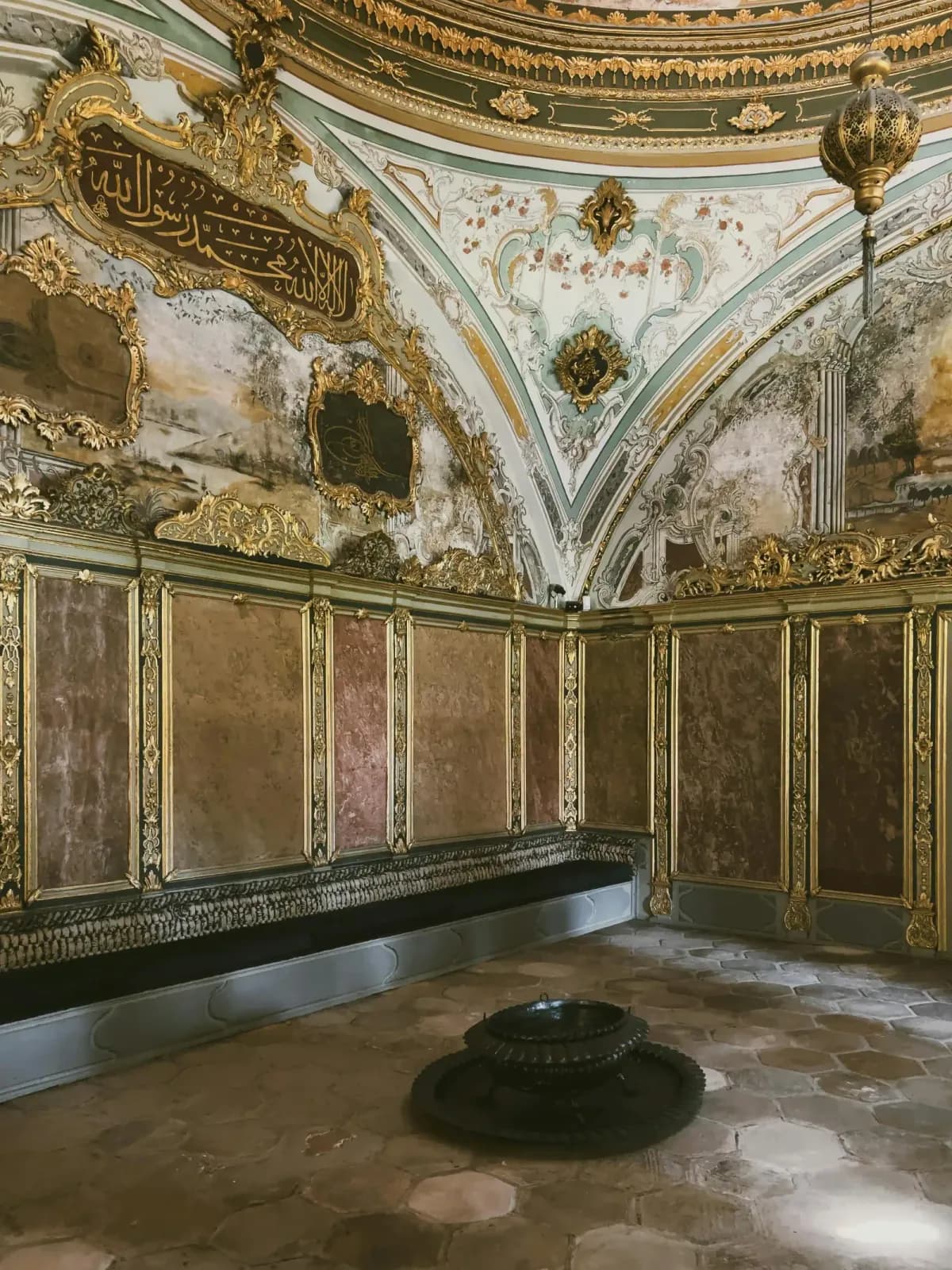
The Kubbealtı (Under the Dome) got its name from its large dome. Here, Ottoman statesmen would gather under the chairmanship of the Grand Vizier to discuss state affairs, hold important trials, and receive ambassadors. The Sultan would not personally attend the council but would follow the meeting from the latticed window of the Tower of Justice (Adalet Kulesi), located directly above the Grand Vizier's seat.
The Tower of Justice was built during the reign of Fatih (Mehmed the Conqueror) as a tower-pavilion representing the palace. Throughout Ottoman history, it served as an architectural symbol indicating that the state derived its power from justice. It was constructed to be tall enough to be visible from all over Old Istanbul, rivaling the height of the minarets of monumental structures like Hagia Sophia and Sultanahmet Mosque.
The cypress trees that compete with the Tower of Justice are concentrated in the Second Courtyard, where accession ceremonies (cülus) were held. Cypress trees, symbolized by the "elif" character in Ottoman culture and expressing that everything besides God is mortal, carried the meaning of reminding the Sultan that power and authority are transient. Right next to the Divan (Imperial Council Hall) is the Outer Treasury (Dış Hazine) building, where the weapon collection is exhibited.
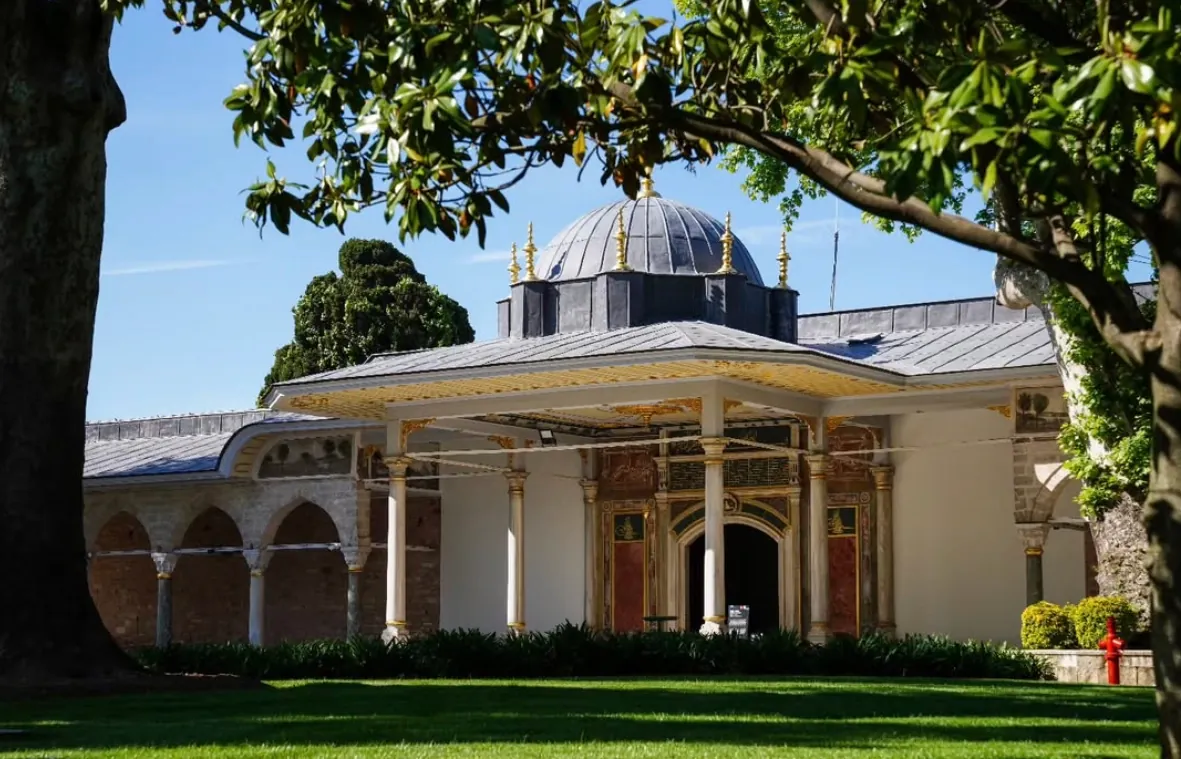
The Bâbüssaâde Gate (Gate of Felicity), also known as the Gate of the White Eunuchs (Ak Ağalar Kapısı), is the transition gate from the Second Courtyard to the Third Courtyard, which you encounter after the Imperial Council Hall (Dîvân-ı Hümâyûn). Located at the end of the Divan Courtyard, the gate separates the outer section of the palace, known as the Birun, from the inner section, called the Enderun.
After entering through the Bâbüssaâde, the Enderun section begins. This gate held primary importance in the palace because the Sultan would sit in front of it during ceremonies.
Throughout Ottoman history, this gate was a place of high symbolic value: it hosted the magnificent accession ceremonies (cülûs) when the princes ascended the throne, served as the spot where the holiday throne (which is now exhibited in the Treasury section of the Topkapı Palace Museum) was placed, where imperial congratulations were accepted, and where the Sancak-ı Hümâyûn (Imperial Standard) was ceremonially handed over to the Grand Vizier setting off for war.
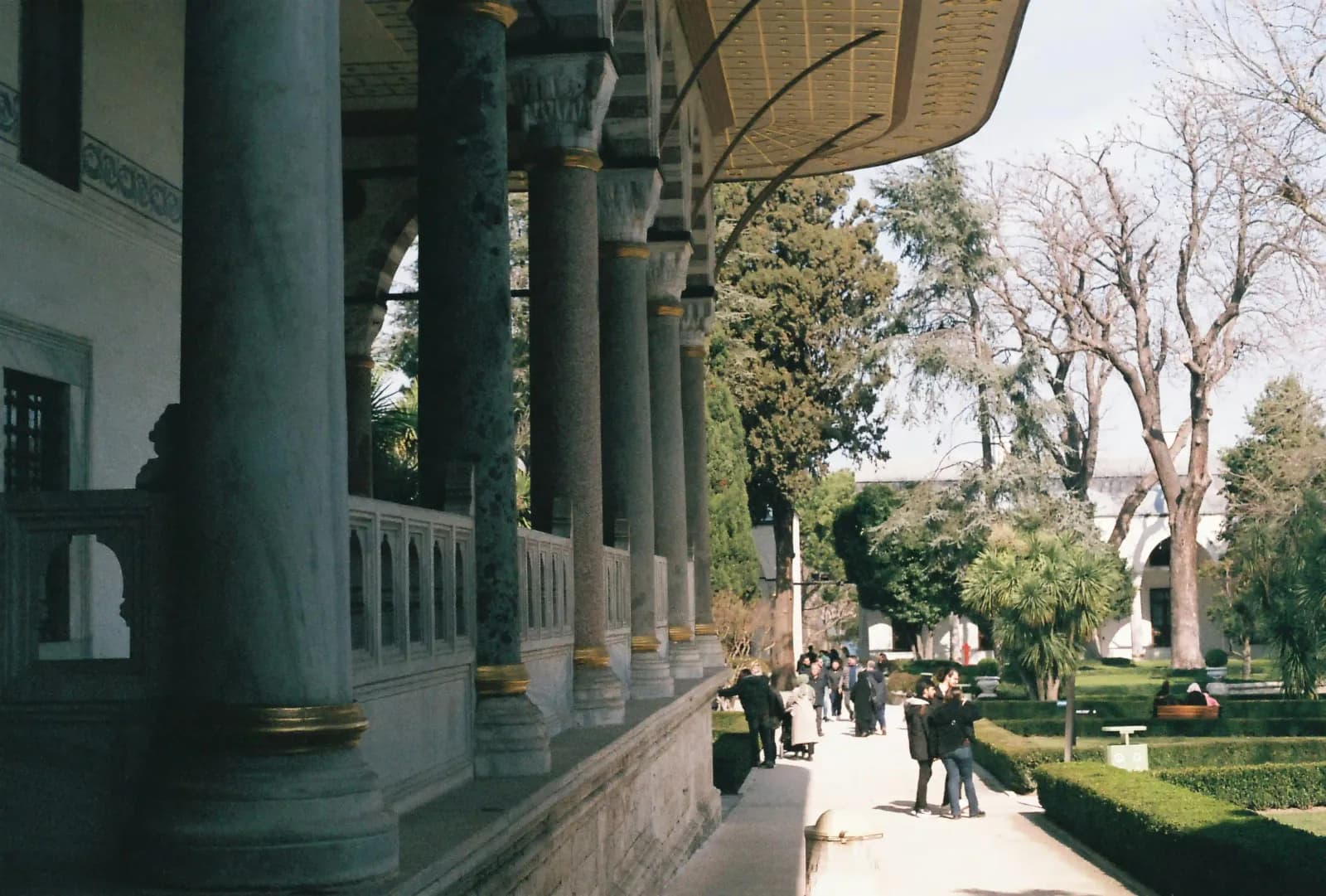
The Third Courtyard is also referred to as the Enderun Courtyard. When the gates of this courtyard, which is surrounded by masonry structures, are closed, it resembles an inner citadel within a fortress. This section housed the private lives of the Sultan and his servants, kept away from the outside world, as well as the wards and spaces where palace education took place.
The Enderun was the highest educational institution in the Ottoman Empire, where prospective state administrators were trained. The Third Courtyard contains structures belonging to the Sultan, such as the Audience Chamber (Arz Odası), the Enderun Treasury, and the Privy Chamber (Has Oda), as well as buildings belonging to the Palace School, which was established during the reign of Sultan Murat II.
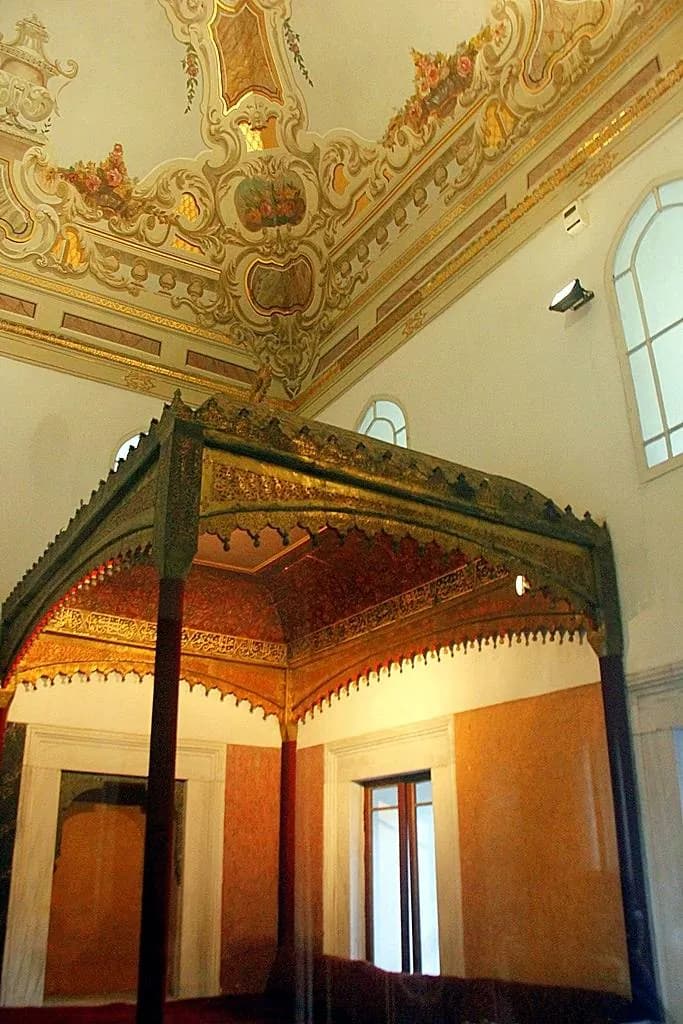
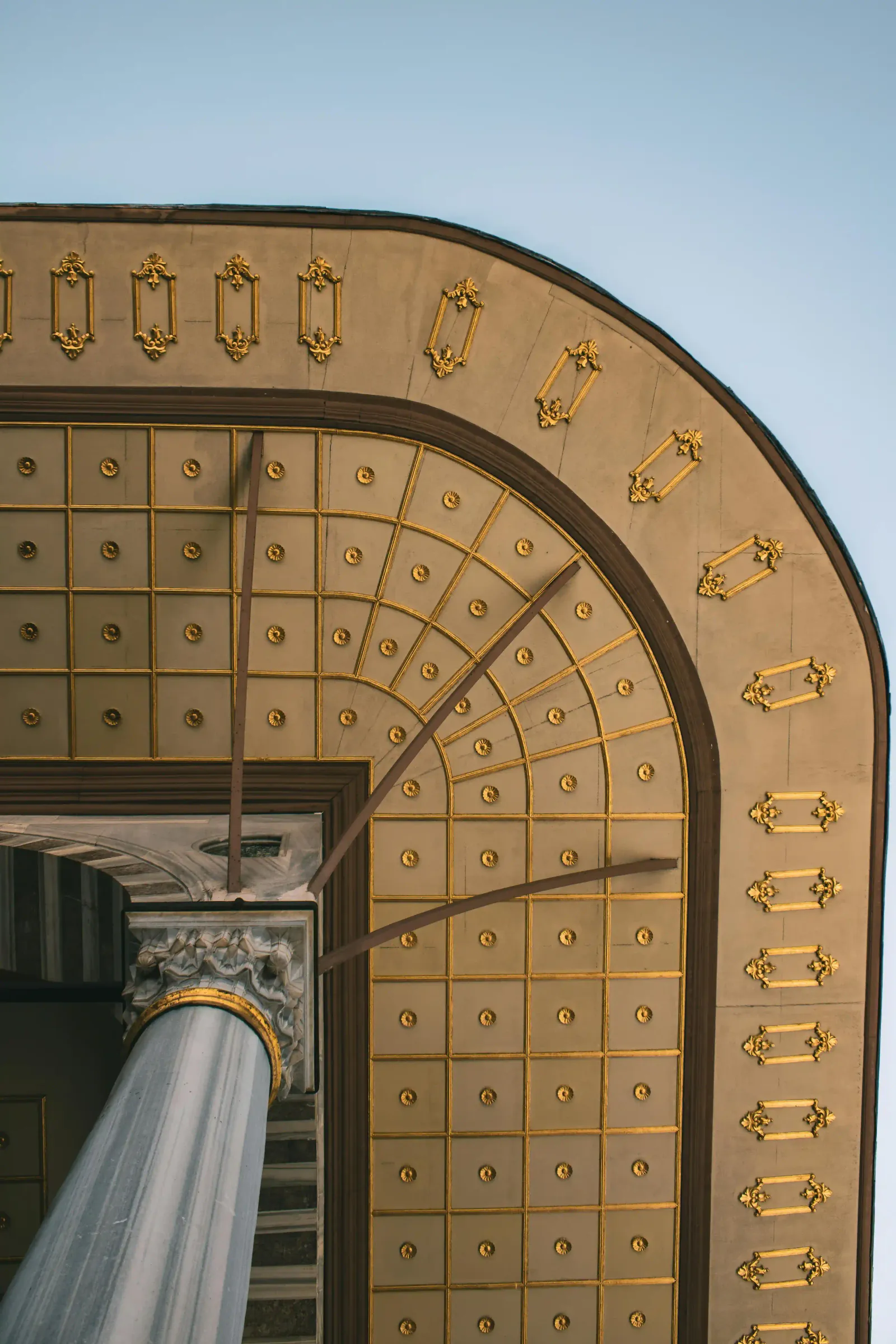
The Audience Chamber (Arz Odası) was the place where the Grand Vizier would present to the Sultan the matters that had been decided in the Imperial Council (Divan). It was built in the 15th century by the order of Sultan Mehmed the Conqueror for official receptions. After the earthquake in 1509, it was rebuilt during the reign of Sultan Süleyman the Magnificent. The Sultans received the Grand Vizier, high-ranking statesmen, and ambassadors here until the Tanzimat reforms in 1839.
The Golden Throne, covered with gold plates and used by the Sultans during holiday greetings ceremonies, is exhibited in the Audience Chamber. This 18th-century ceremonial throne, which reflects the Ottoman state culture and aesthetics, is adorned with 954 large peridot stones.
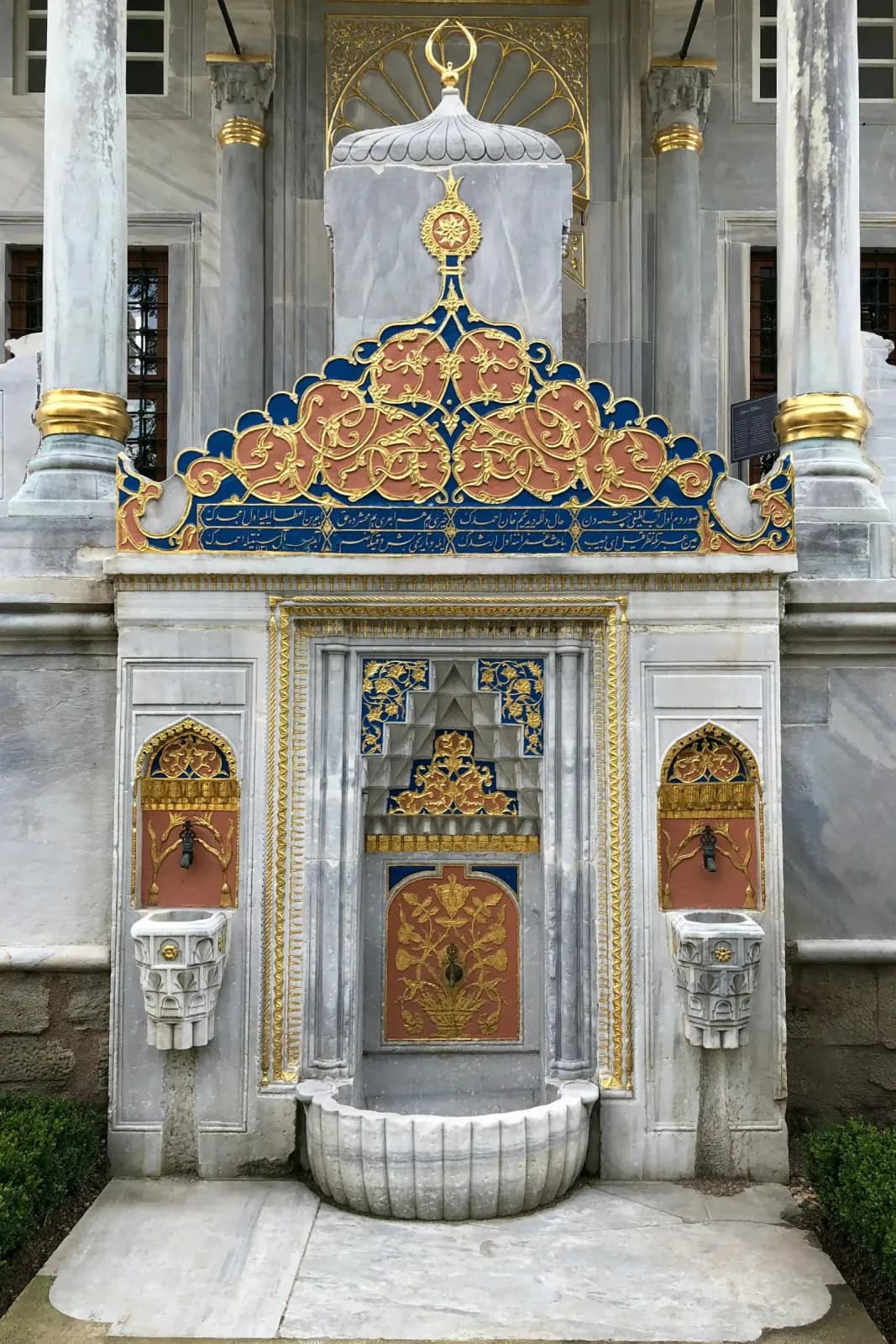
The Ahmed III Library (III. Ahmed Kütüphanesi) is a living testament to the value the Sultans placed on knowledge, thanks to its priceless collection. The students in the library benefited from its resources. Located in the Enderun Courtyard of the Topkapı Palace Museum, the library is unique due to its inscription which explicitly states that books could under no circumstances be taken out of the palace.
The Fourth Courtyard is home to the Sultan's pavilions and terraced gardens. This courtyard contains the Baghdad and Revan Pavilions (Köşks) and the Iftariye Arbor (Kameriyesi), which are among the most distinguished and aesthetically advanced examples of Ottoman classical pavilion architecture. The lower part of the Fourth Courtyard features the last structures belonging to the palace: the Mecidiye Pavilion and the Robing Chamber (Esvab Odası).
The dome of the Revan Pavilion, located in the Fourth Courtyard, which was commissioned by Sultan Murad IV in 1636 to commemorate the conquest of Yerevan (Revan), is incredibly beautiful. The pavilion, arranged according to an octagonal plan, features a dome with unique pen work (kalem işi) decorated with gold leaf.
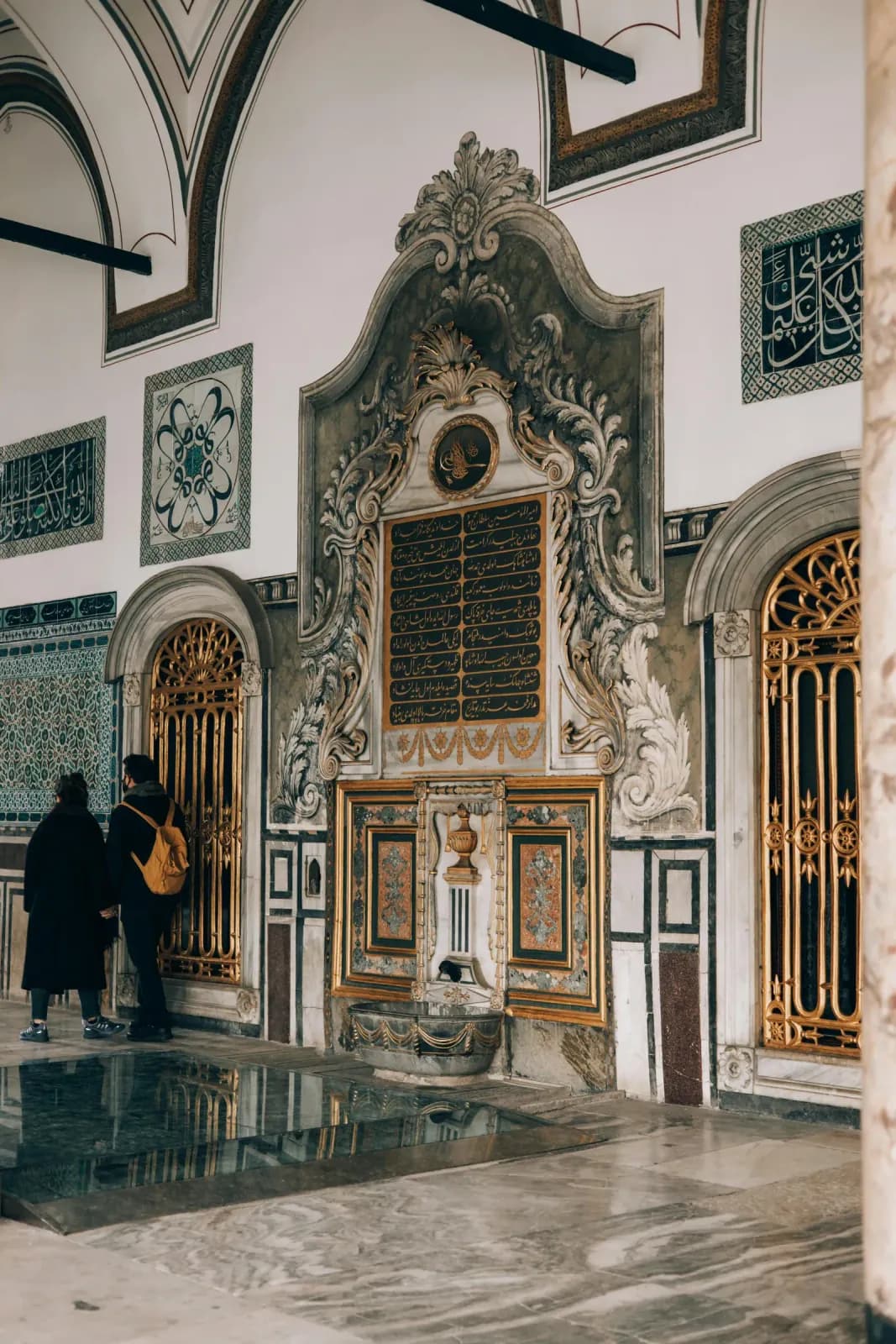
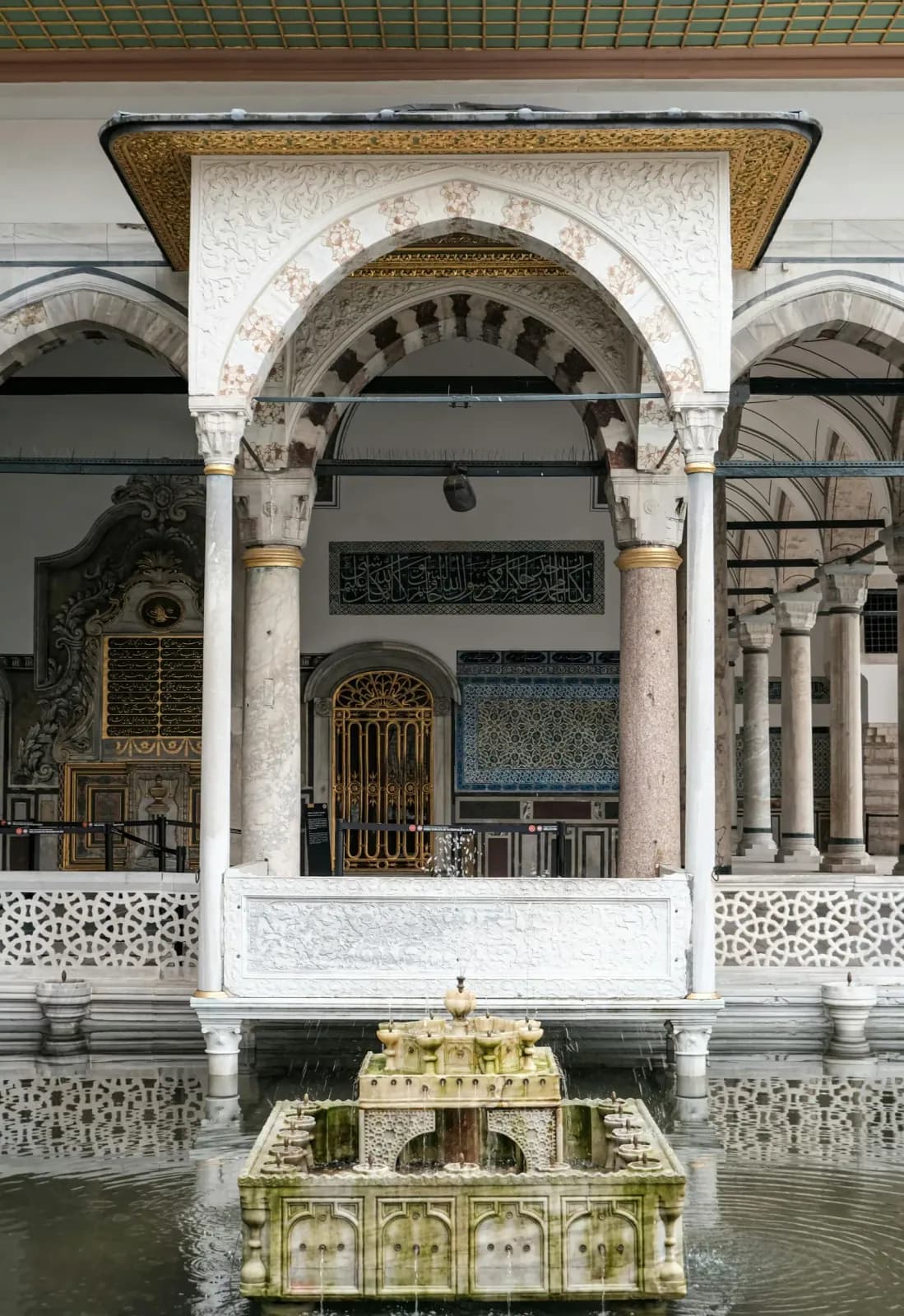
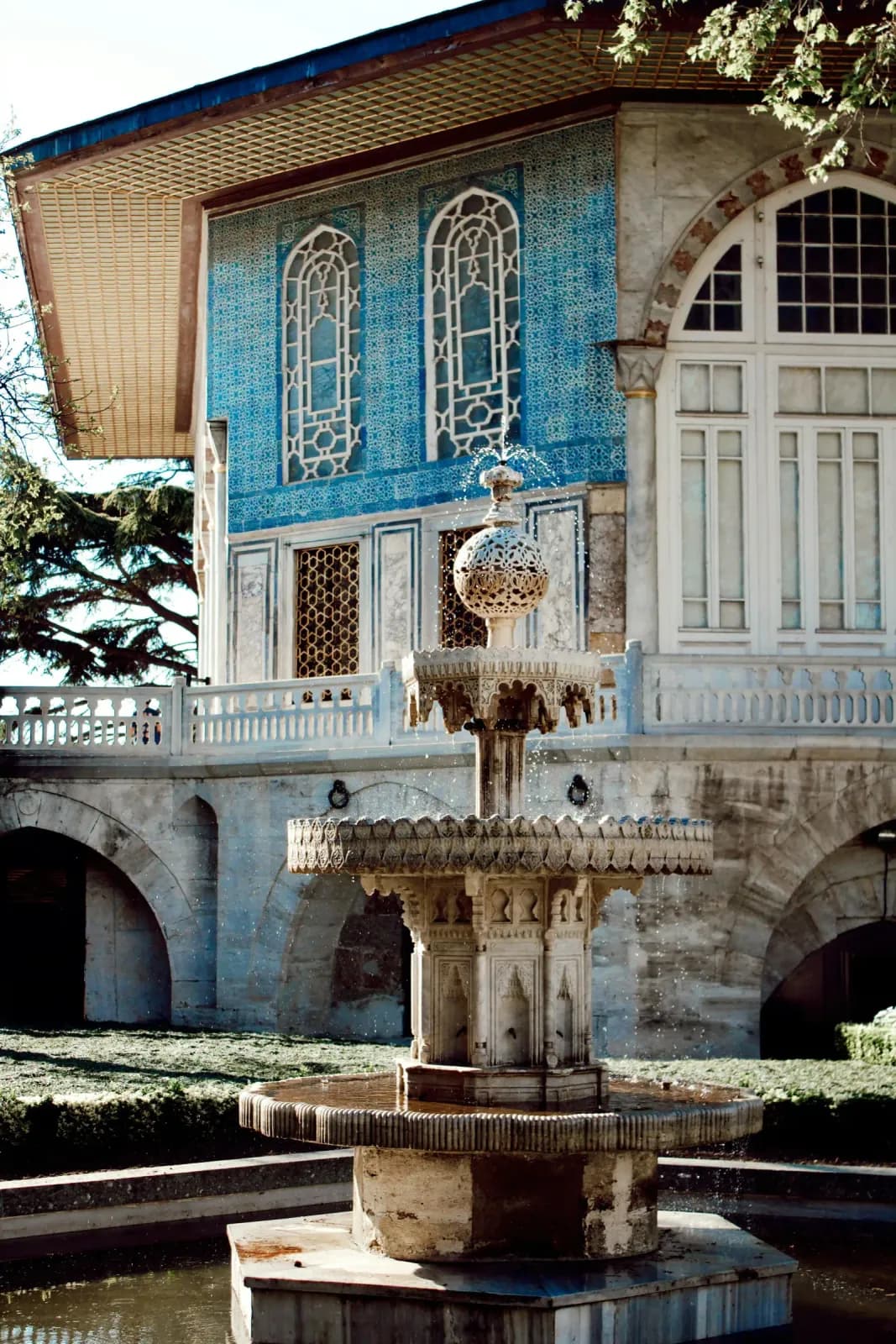
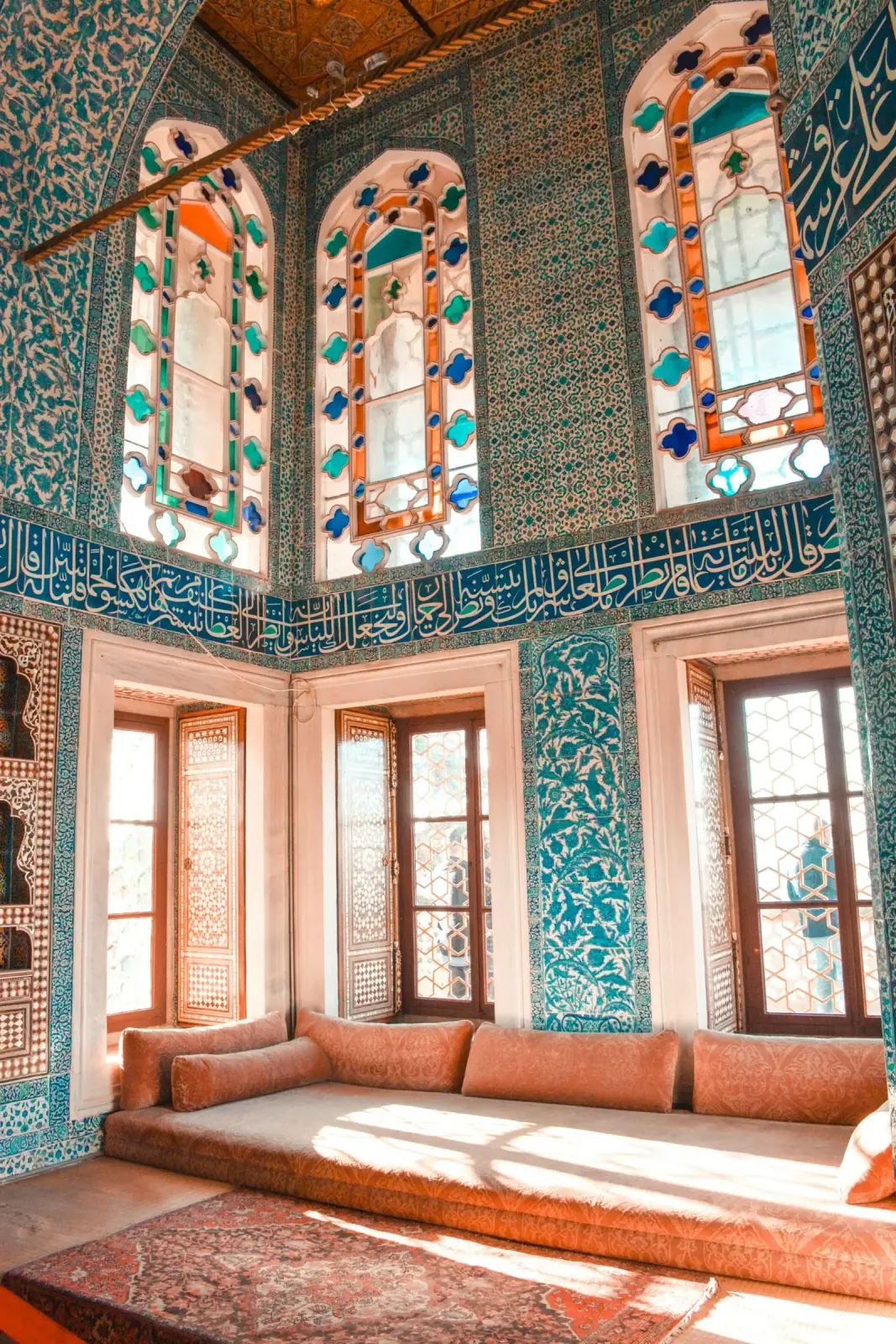
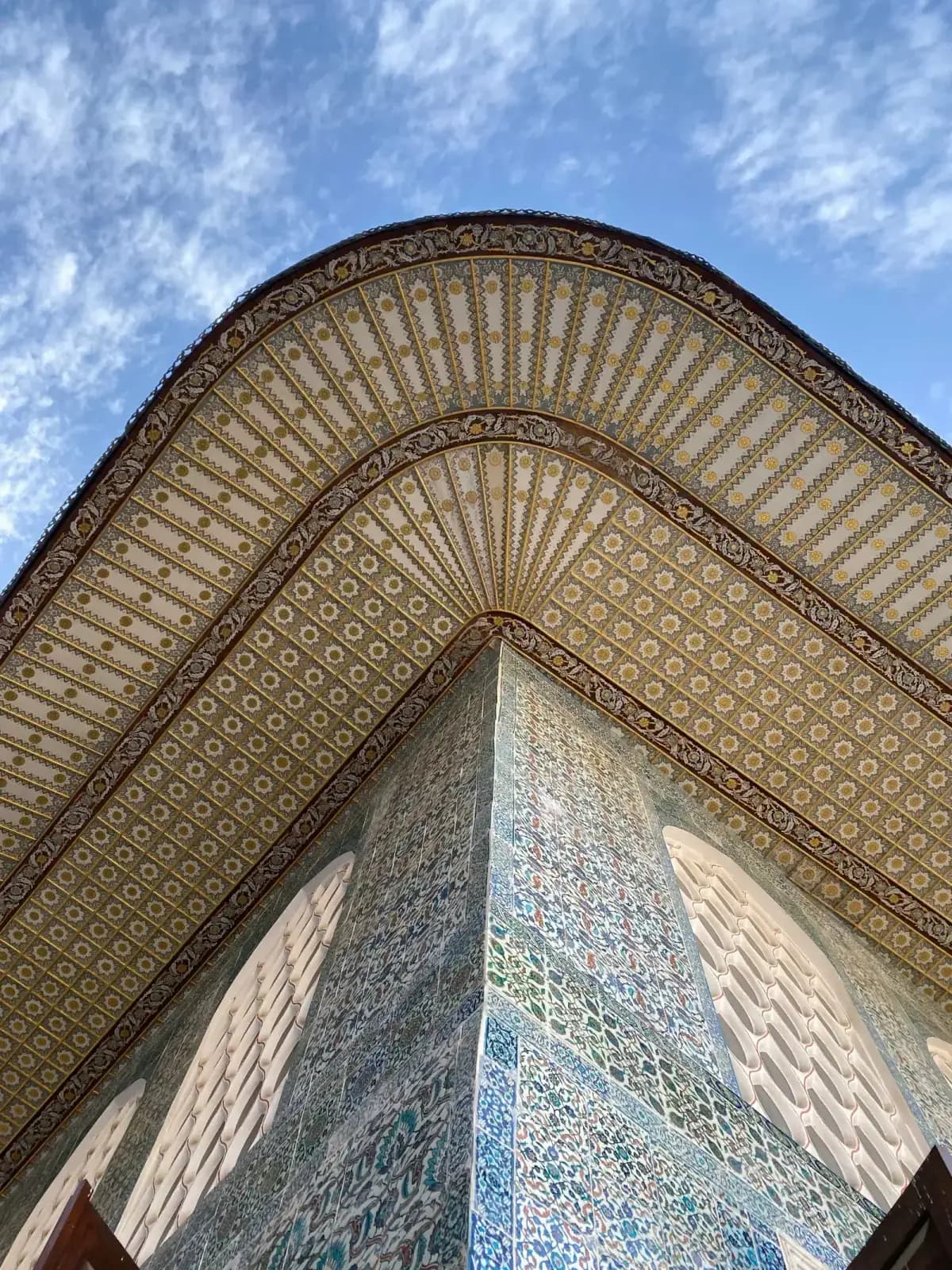
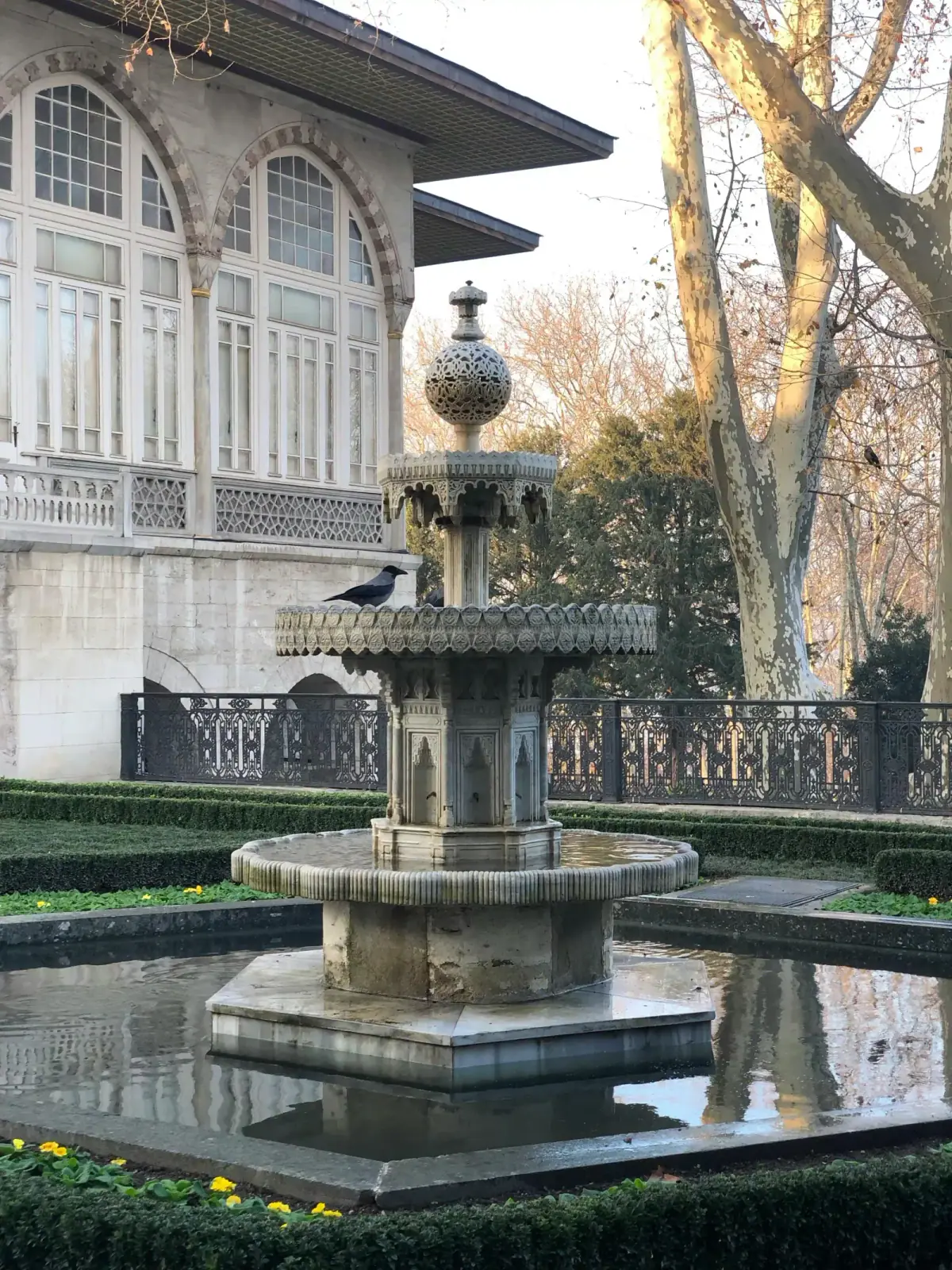
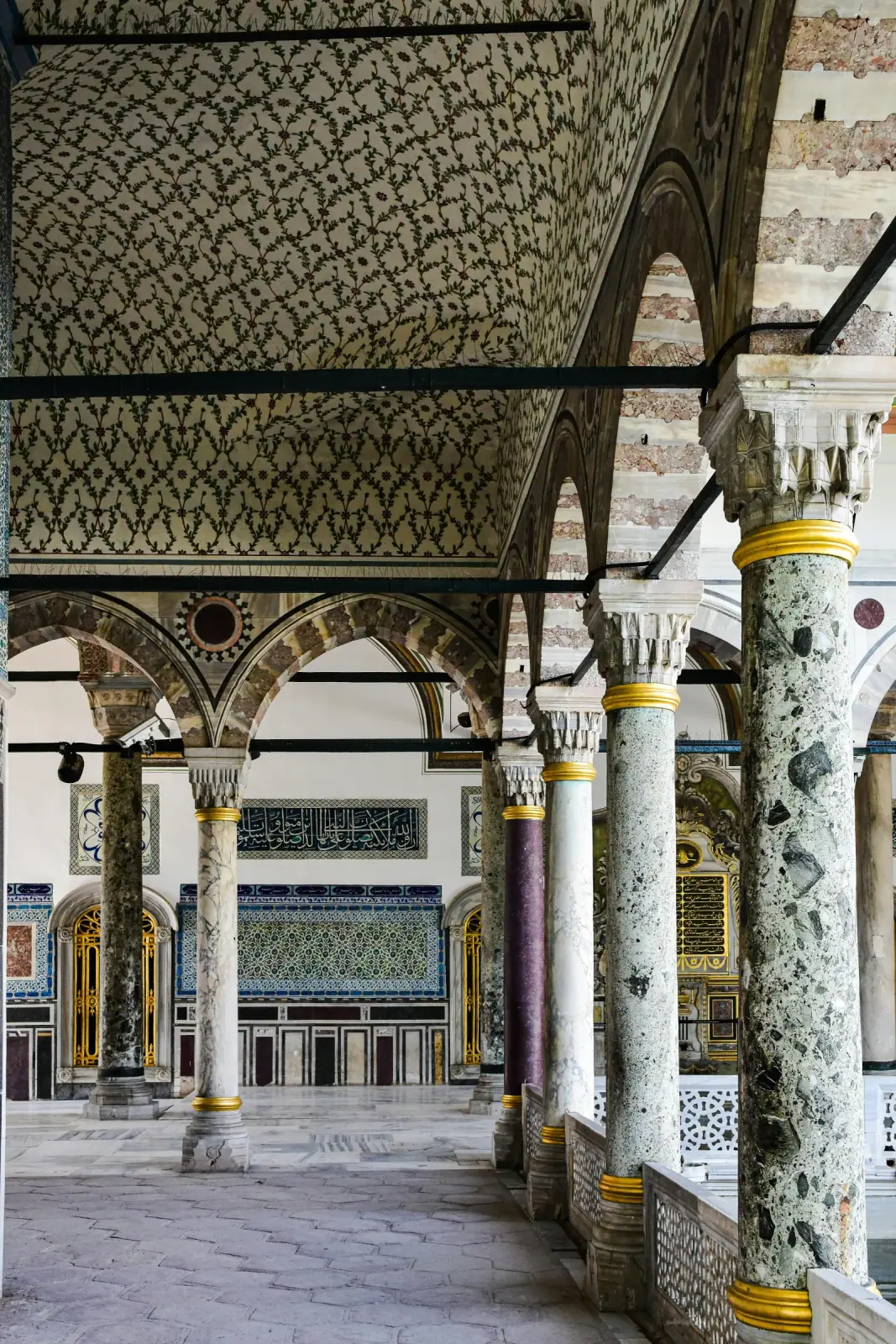
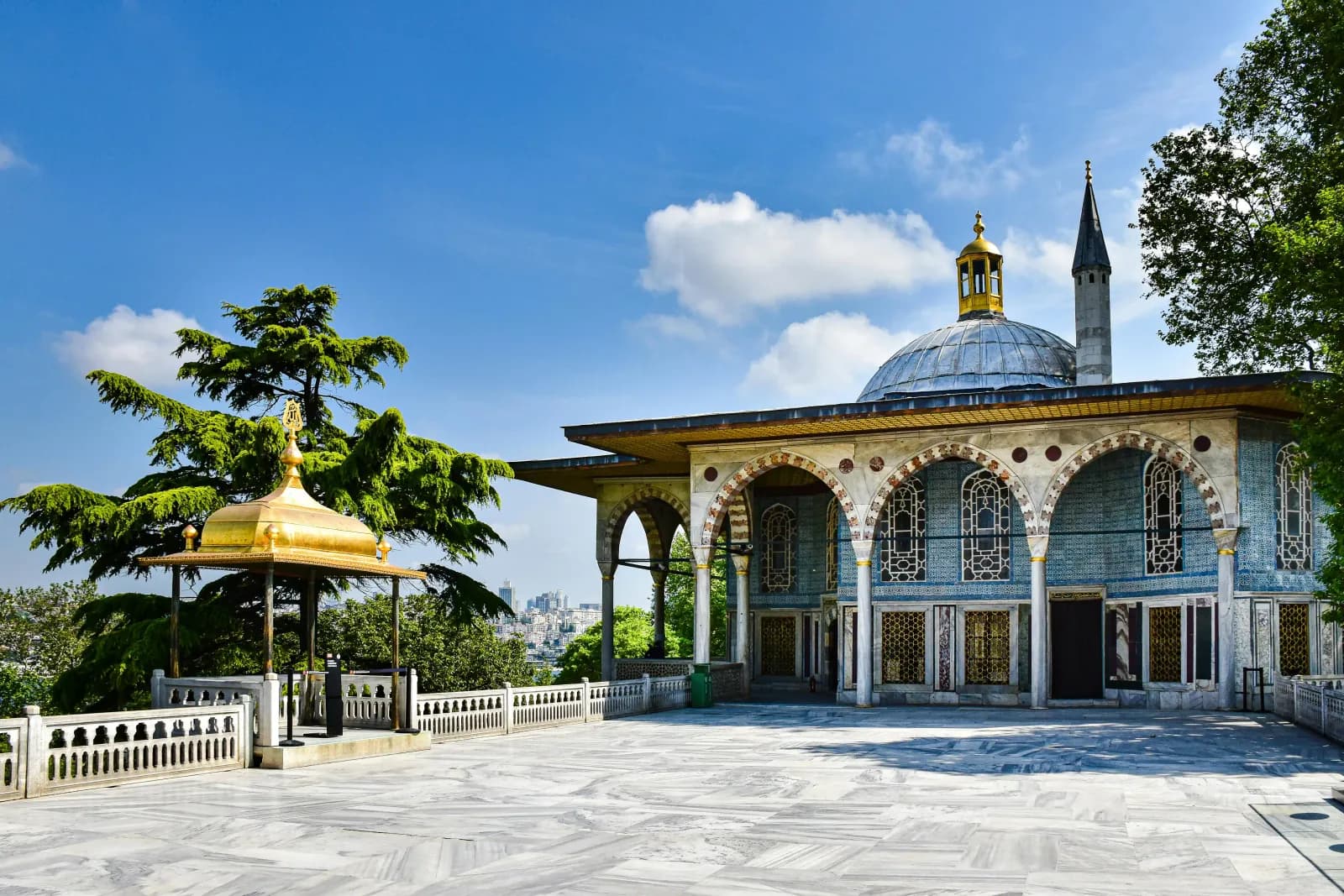
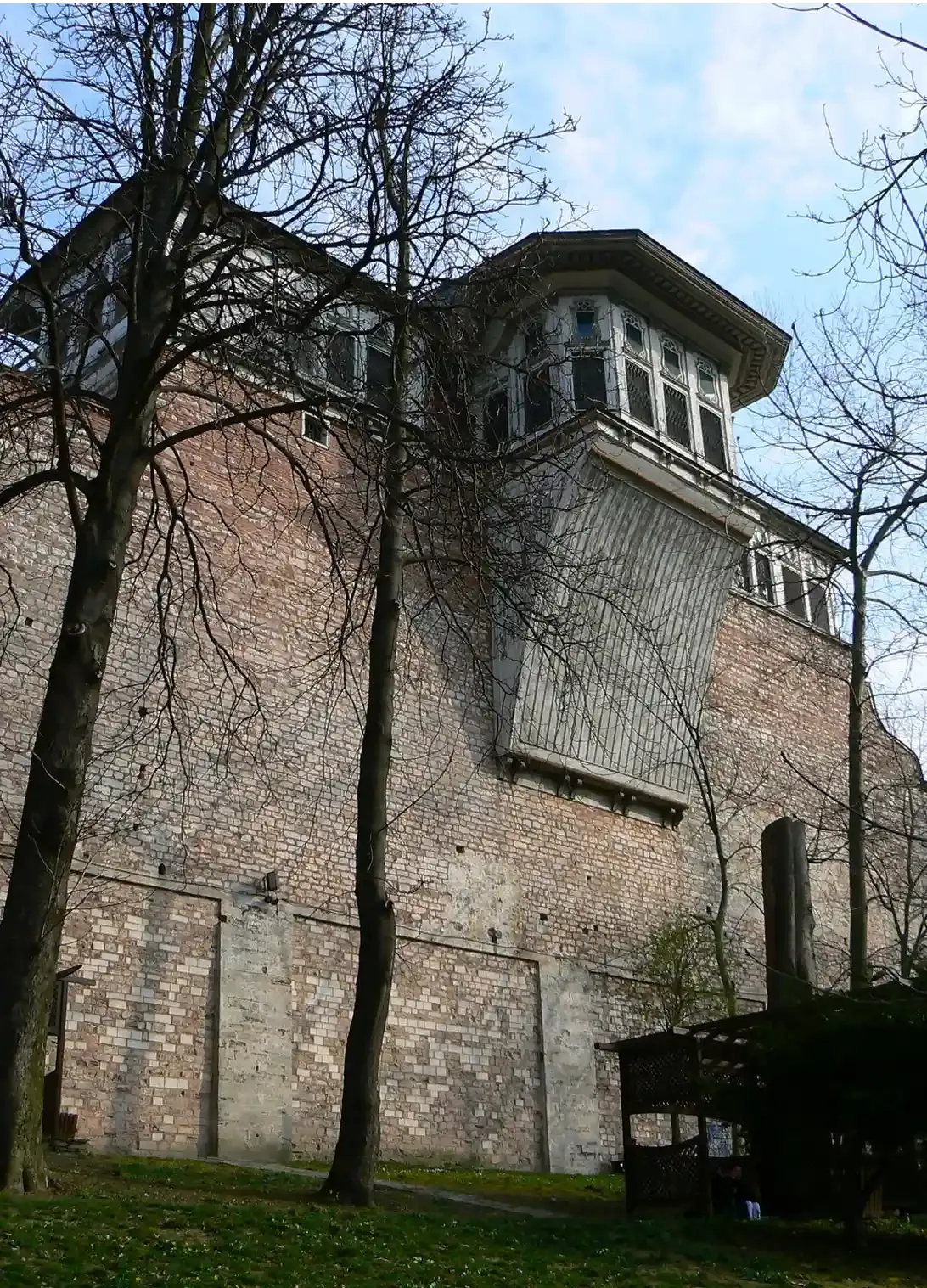
The Baghdad Pavilion (Bağdat Köşkü) is a pavilion whose construction began when Sultan Murad IV set out for the Baghdad Campaign in April 1638. It was not completed when the Sultan returned to Istanbul in June 1639 and could only be finished after the Sultan's death in 1640.
The Sofa Pavilion (Sofa Köşkü) / Kara Mustafa Pasha Pavilion (Kara Mustafa Paşa Köşkü) is a building with a unique appearance that significantly influenced 18th-century civil architecture, particularly the floor plans of the seaside mansions (yalıs) on the Bosphorus. It received its name because it was built during the Grand Viziership of Kara Mustafa Pasha between 1676 and 1683. It is the earliest example of a new style known as Turkish Rococo. The structure, with two façades looking out onto the Sofa-i Hümâyun and the lower garden, was used like the Privy Chamber (Has Oda). The Sofa Pavilion has two inscriptions indicating that it underwent restoration during the reigns of Sultan Ahmed III and Sultan Mahmud I.
The Mecidiye Pavilion (Mecidiye Köşkü), also called the New Pavilion, is the last building added to the palace, constructed in 1858. Although it was intended as a resting place for the Sultan and for hosting close guests, it was rarely used; even Sultan Abdülmecid stayed here for only one night.
The Sofa-i Hümâyun (Imperial Sofa) is the area where the broad, double-columned arcade of the Privy Chamber (Has Oda) opens up. Also known as the Marble Sofa, this terrace is one of the favorite spots of Topkapı Palace, consisting of a flower garden and a marble terrace with a pool.
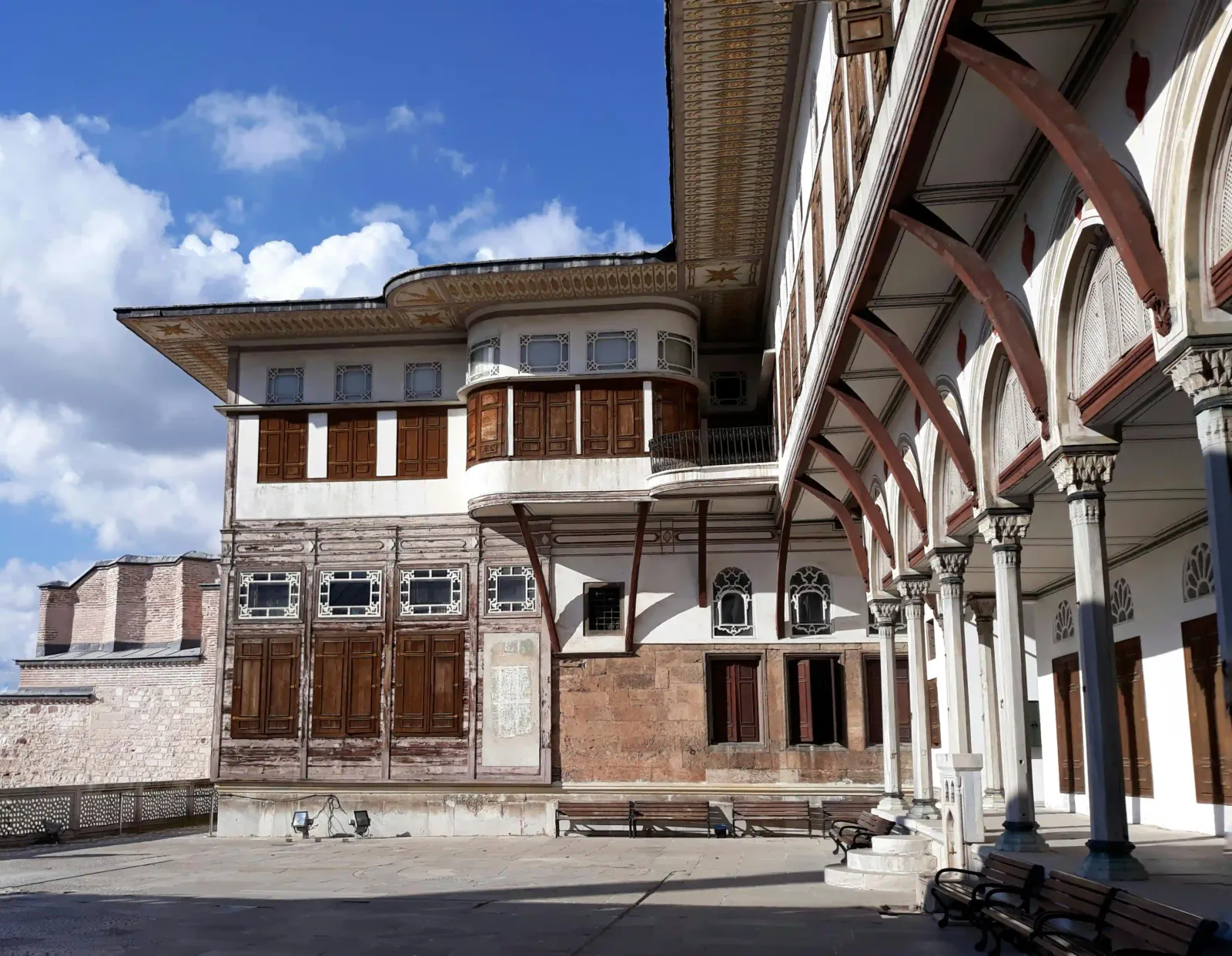
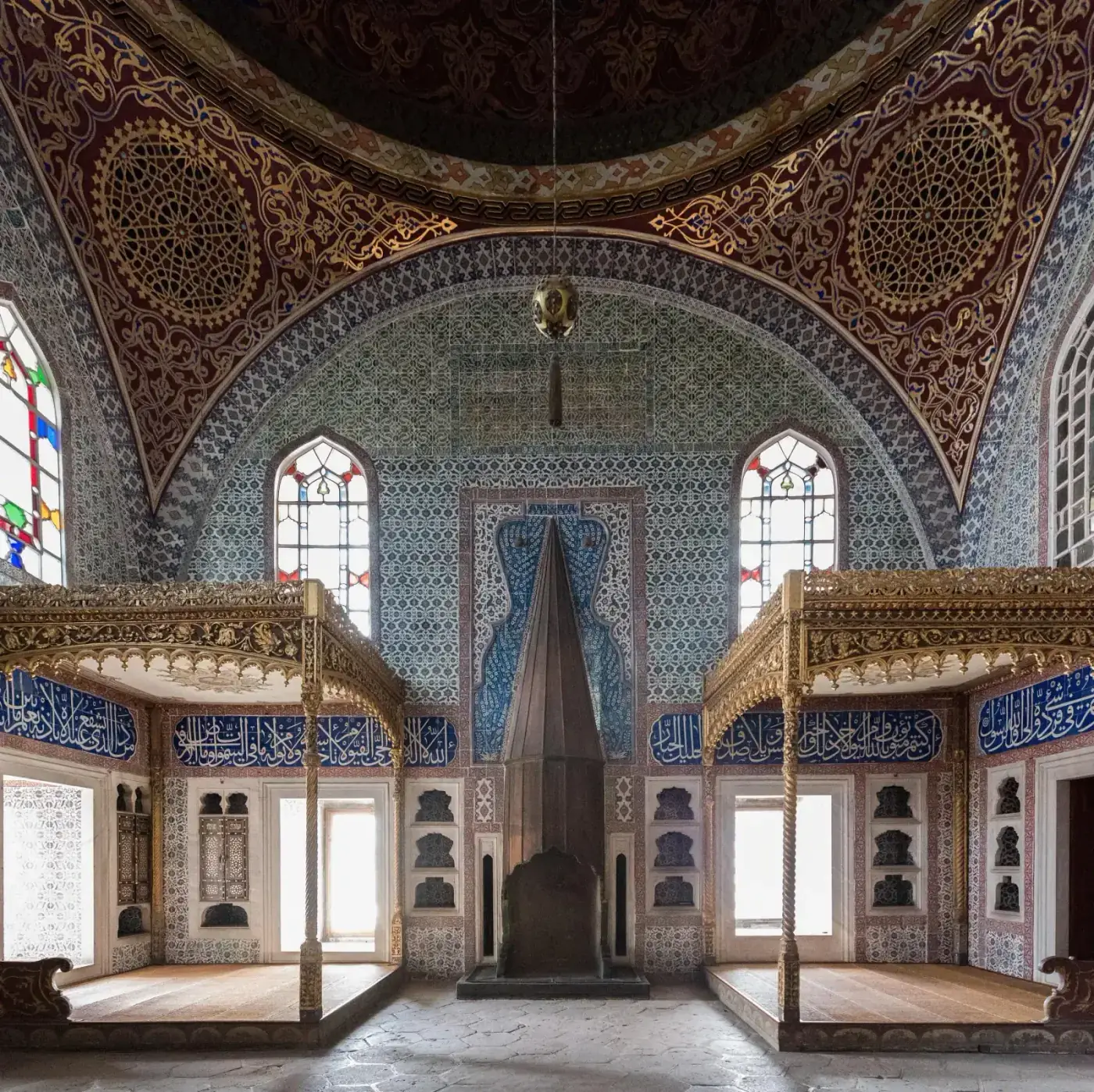
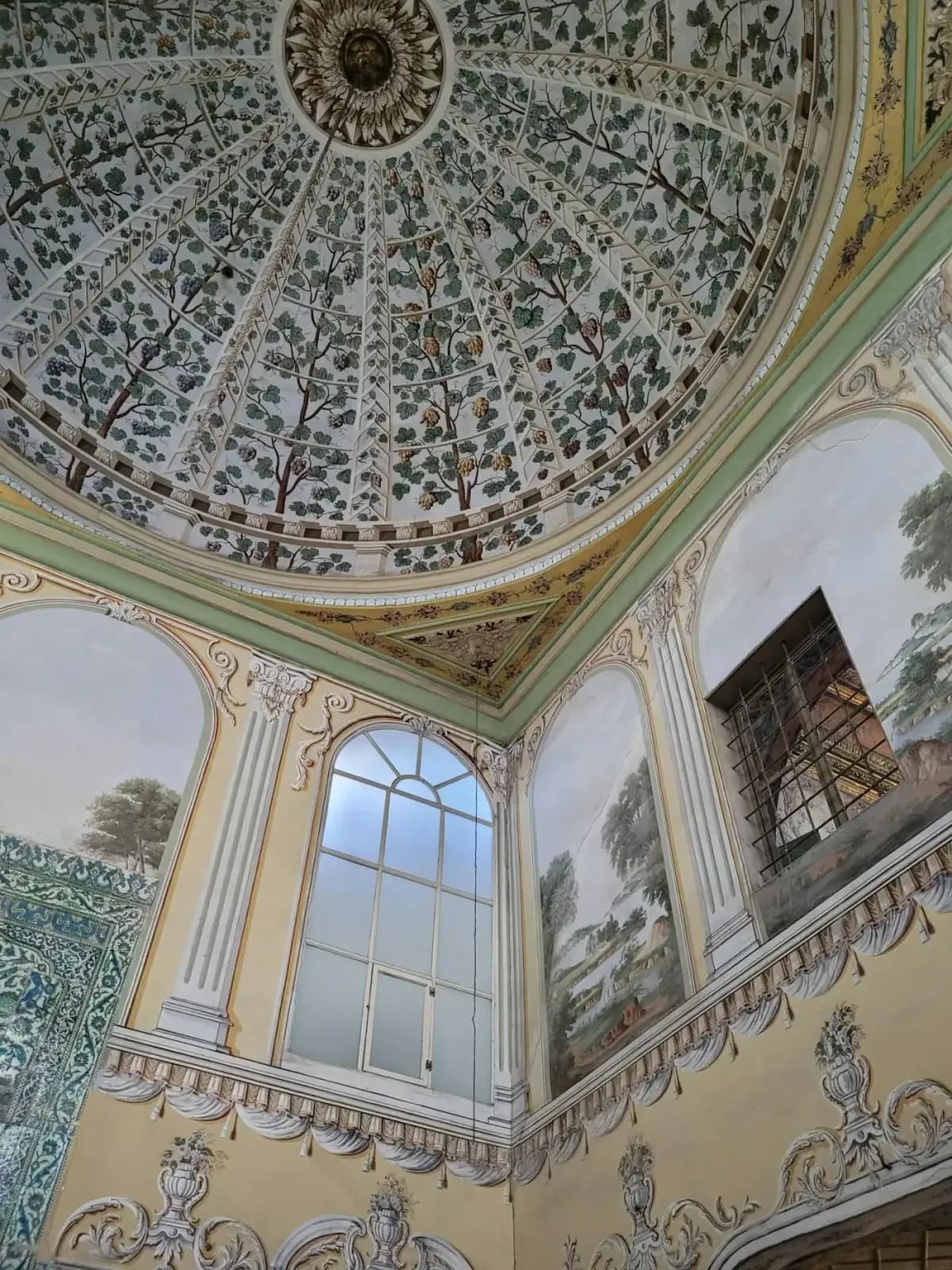
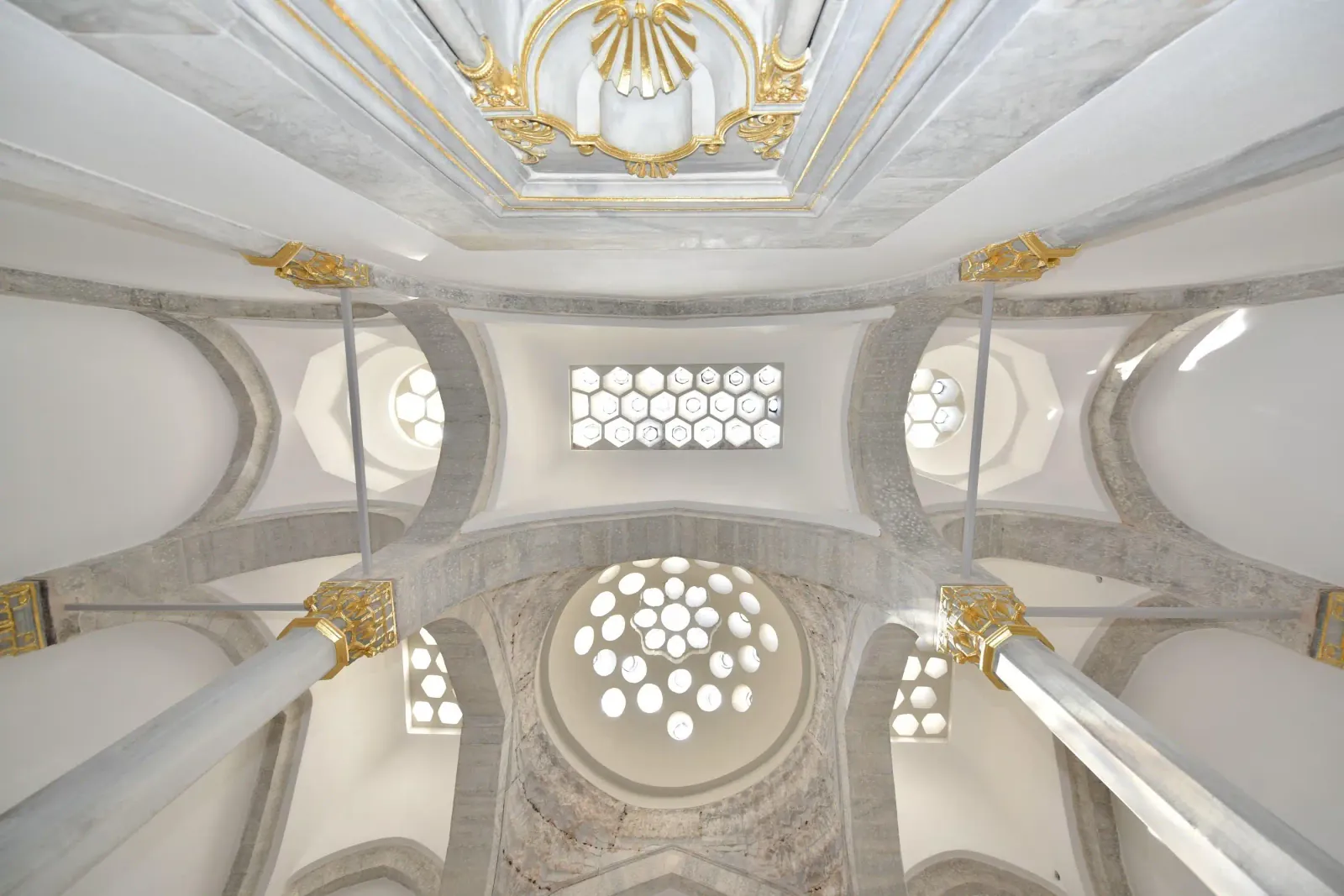
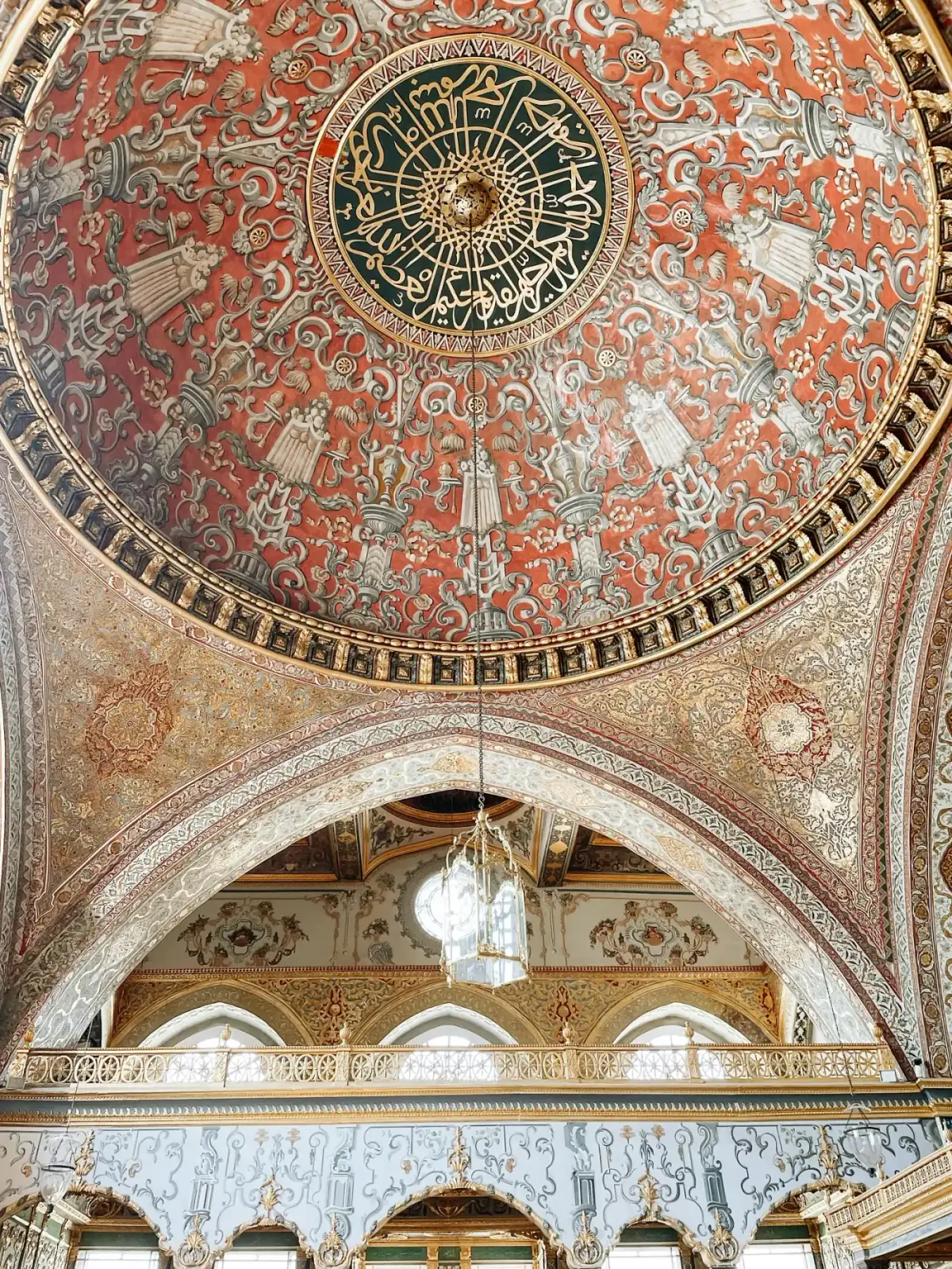
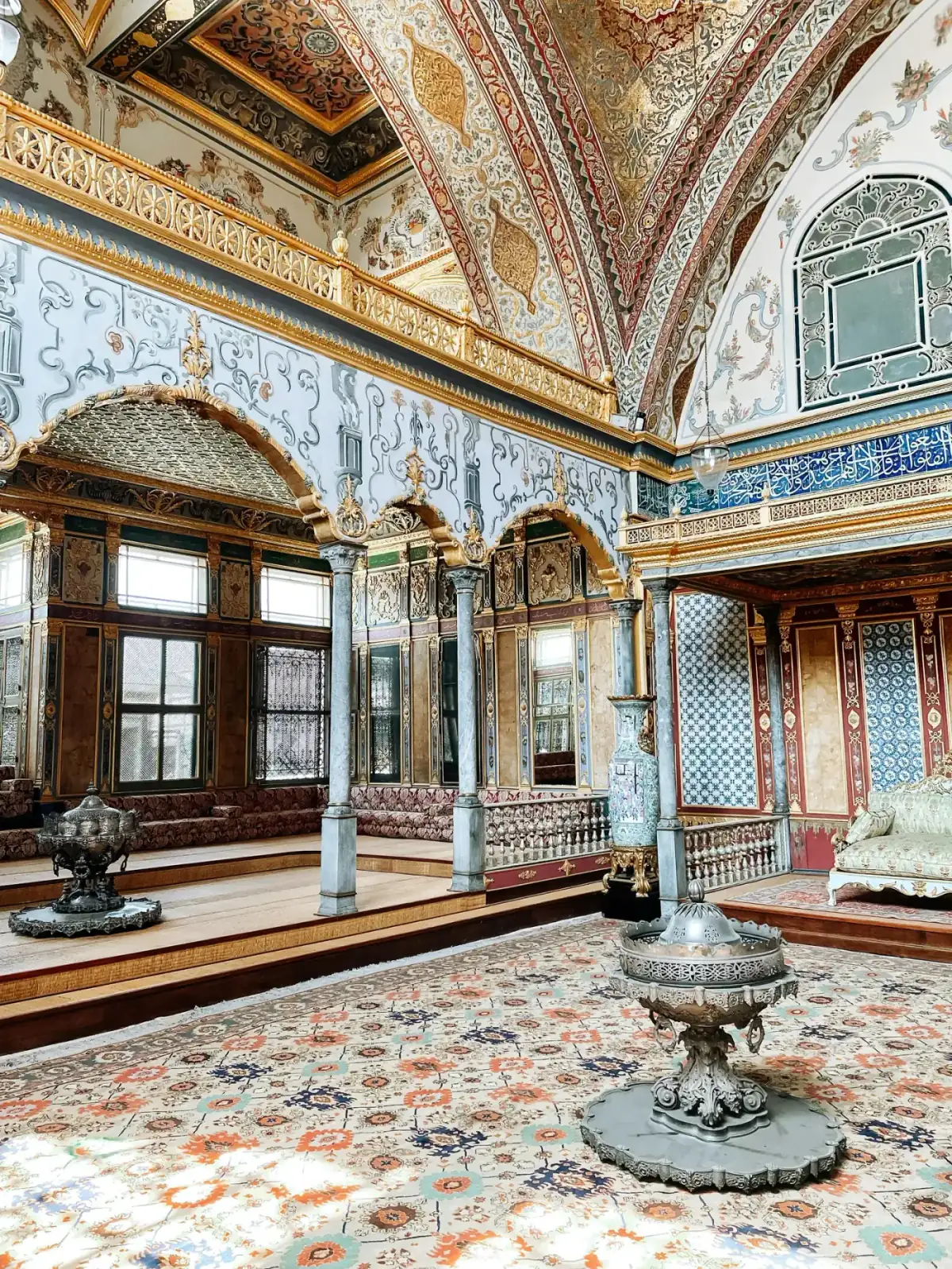
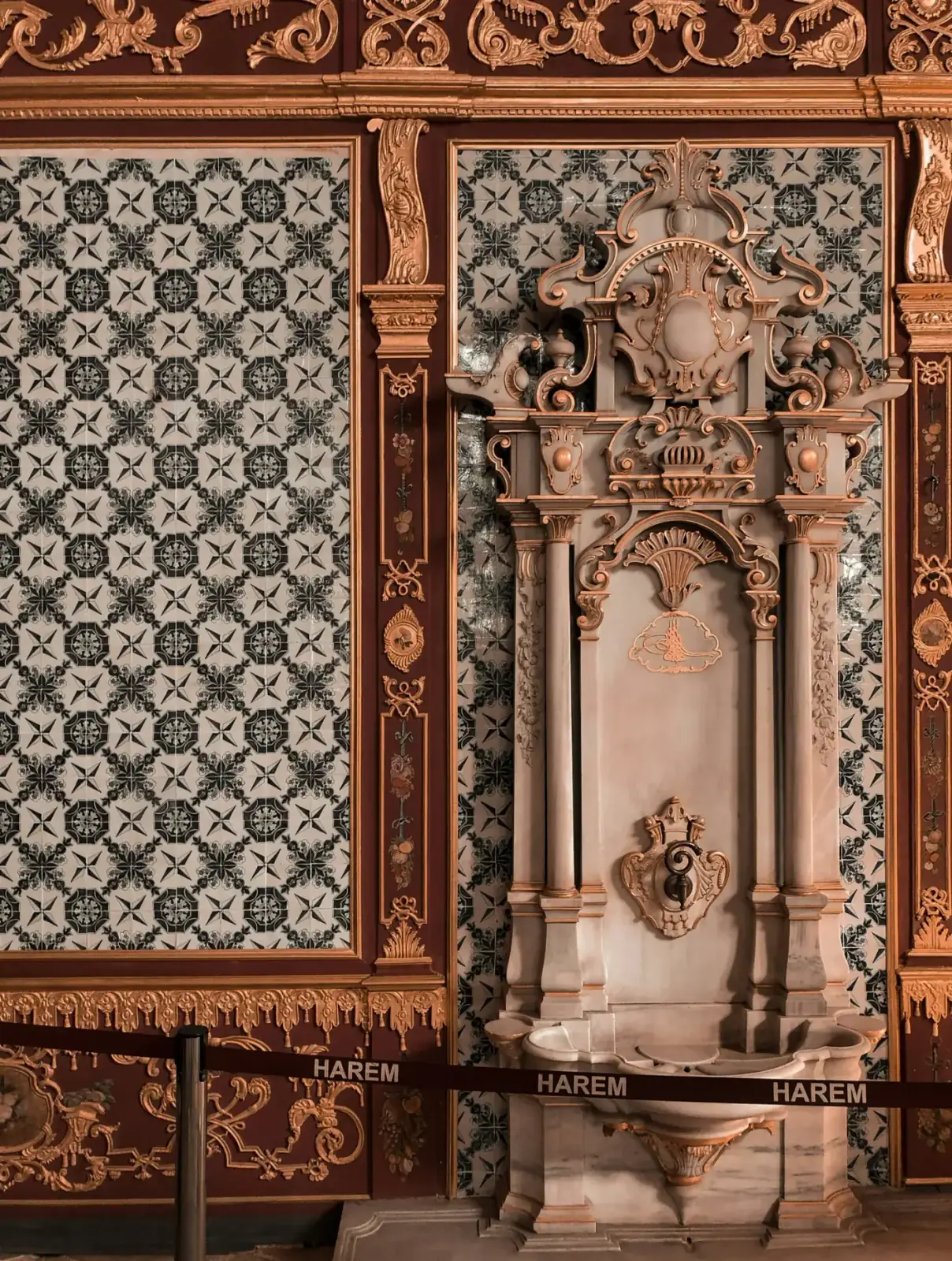
Located adjacent to the Third Courtyard, the Harem was far from a simple, isolated female quarter; it was a vast and complex residential structure with its own internal hierarchy. It was home to the Sultan's mother (Valide Sultan), who wielded significant power in the court hierarchy, along with wives and concubines, a population of up to a thousand people. The Harem is known to contain approximately 300 rooms, 9 baths, 2 mosques, 1 hospital, and numerous dormitories. It was directly connected to the Enderun through special gates and corridors, allowing the Sultan to transition easily between his administrative duties and his private life.
The Chamber of the Holy Relics
Located in the Third Courtyard, this chamber houses sacred relics belonging to the Prophet Muhammad and other prophets, holding immense spiritual value for the Islamic world.
Topkapı Palace was converted into a museum in 1924. As you explore, realize that you are not just walking through stone and marble, but through the very spaces where a four-century-old empire was governed, educated, worshipped, and lived.
Ready to uncover the secrets of this monumental Imperial center?