Hammams
Five hundred years of bath culture, still steaming.
Should you choose a traditional or a restored hammam?
Istanbul's working hammams fall roughly into two camps, and the difference matters more than the price list. The historic baths, the ones built by imperial architects and still standing on their original marble, offer the ritual more or less as it has been performed for centuries: a hot room, a scrub, foam, cold water, tea. The restored baths add comfort around that core, with private rooms, oils and massage on the menu alongside the classic wash.
Neither is more authentic than the other; the buildings are the same age. What changes is the pace. A traditional session is brisk and communal, done in an hour. A restored one invites you to linger. If it is your first hammam, the historic route is the better story, and the easier one to walk into without booking weeks ahead.
What actually happens inside a Turkish bath?
You undress in the camekân, the changing hall under the entrance dome, and wrap yourself in a peştemal, the thin checked cotton cloth the bath provides. From there you move into the sıcaklık, the hot room, and lie on the göbek taşı: a broad slab of marble heated from below. Nothing is asked of you for the first fifteen or twenty minutes. You sweat, the steam works, the domed ceiling drips.
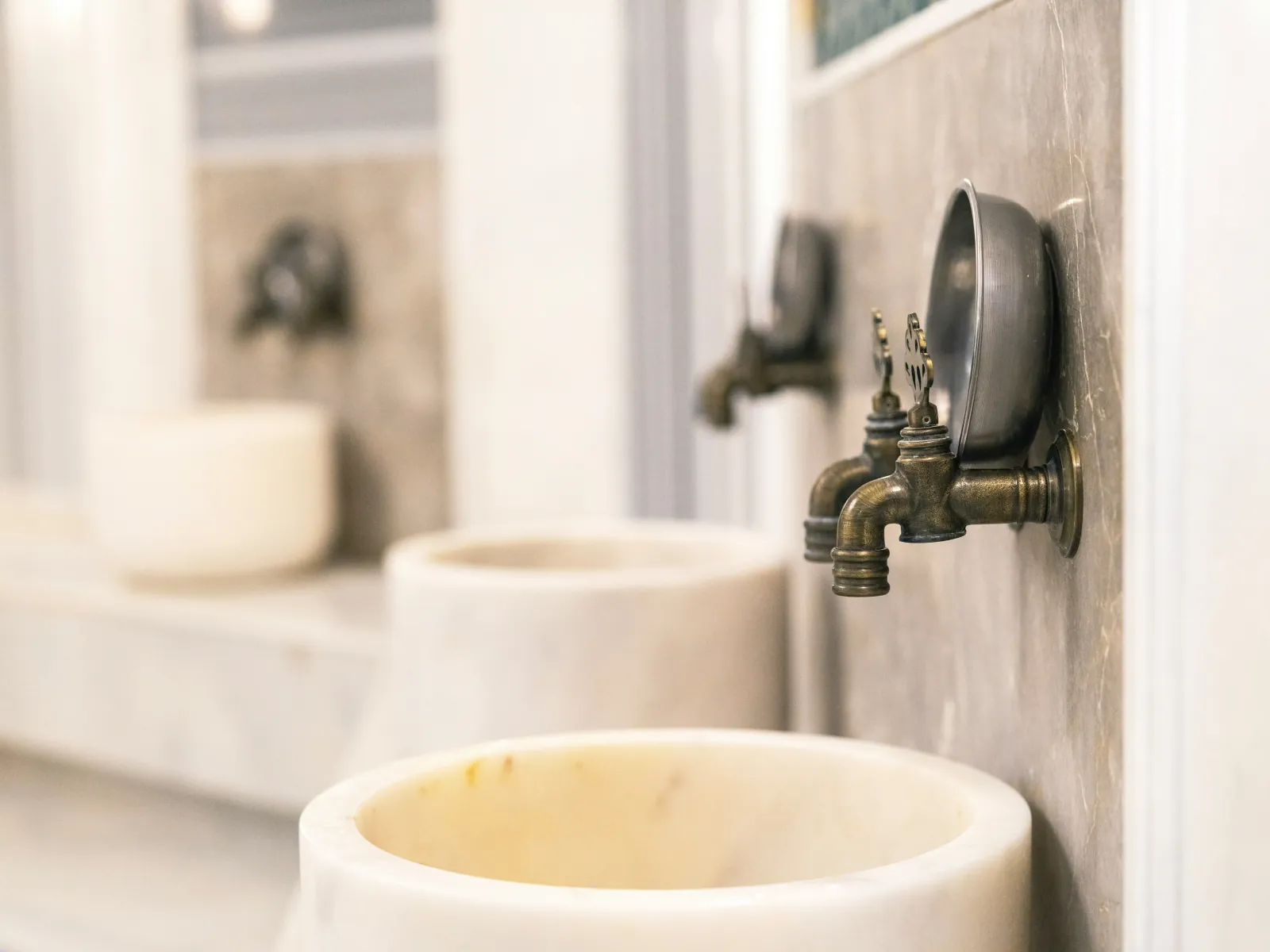
Then the attendant takes over. The tellak or natır is always the same sex as you. First the kese, a coarse mitt drawn hard across the skin; expect to be surprised by what comes off. Then the foam, poured from a cloth bag in improbable quantities, and a wash that is closer to being handled than being massaged. You rinse at a marble basin, cool down slowly in the camekân, and drink tea. Ninety minutes, start to finish, is a generous estimate.
Before you go
Men and women never bathe together in the historic baths. Some have two separate wings; others give the building over to one sex at a time, so the schedule is the thing to check before you set out. It changes by season and by bath.
Bring nothing. Peştemal, towel and wooden slippers come with the ticket. Swimwear is optional in single-sex sessions and most visitors wear the bottom half. Skip the hammam within a day of shaving or waxing, arrive hydrated rather than full, and leave the afternoon loose afterwards: the ritual is more tiring than it sounds, and the point is not to rush anywhere next. Tipping the attendant is customary and not included.
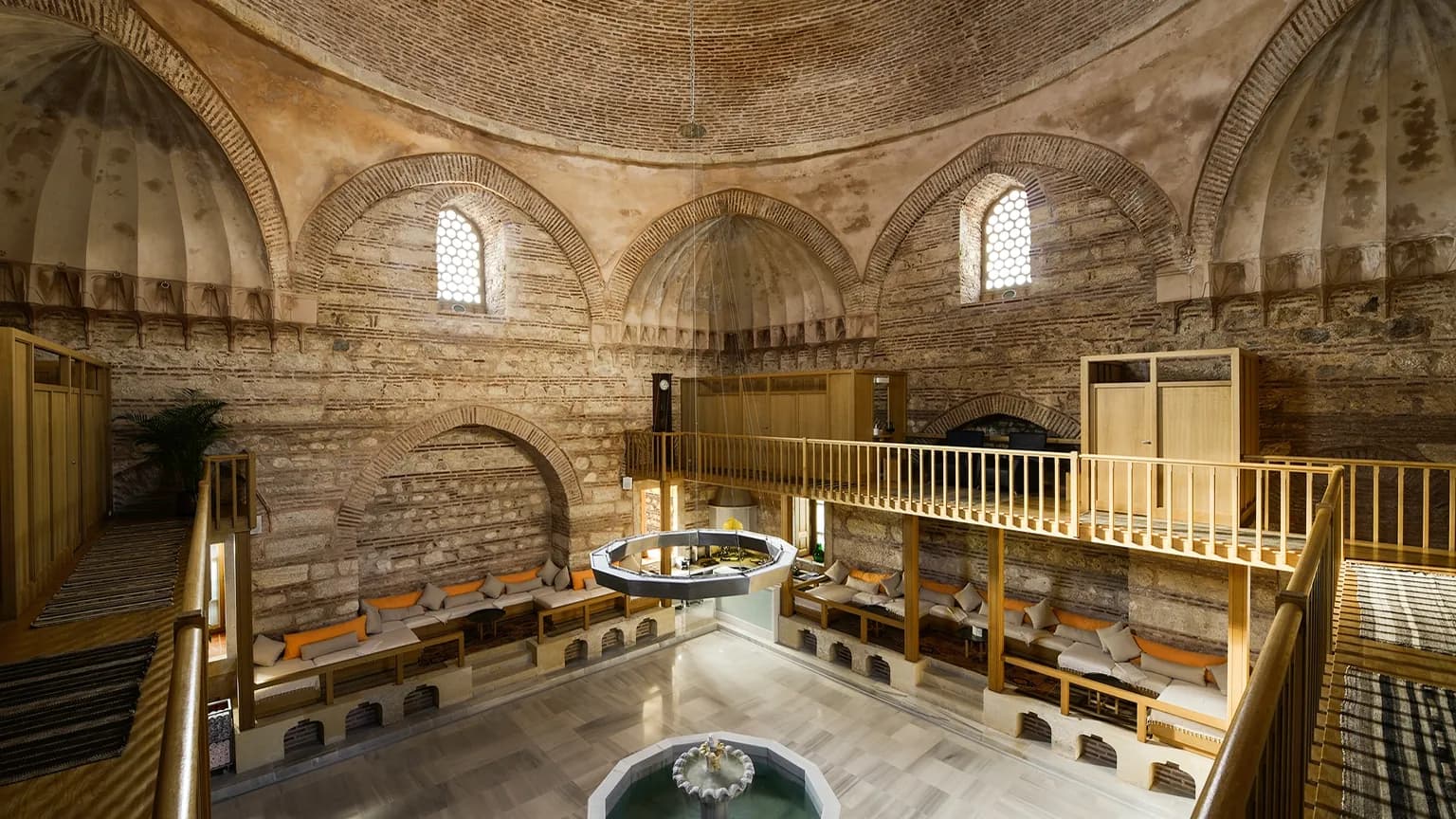
The closest of the great baths to our door, a few minutes on foot through Tophane. Sinan built it in 1583 at the end of his career, for the sailors of the fleet whose admiral commissioned the mosque complex around it. The scale still reads that way: one enormous domed hot room rather than the warren of small chambers you find in later baths.
A decade-long restoration brought it back into service, restrained enough that the marble and the light are the whole design. There is a single bath rather than two wings, so men and women are given the building at different hours; check the day's schedule before you walk over, and book ahead in summer.
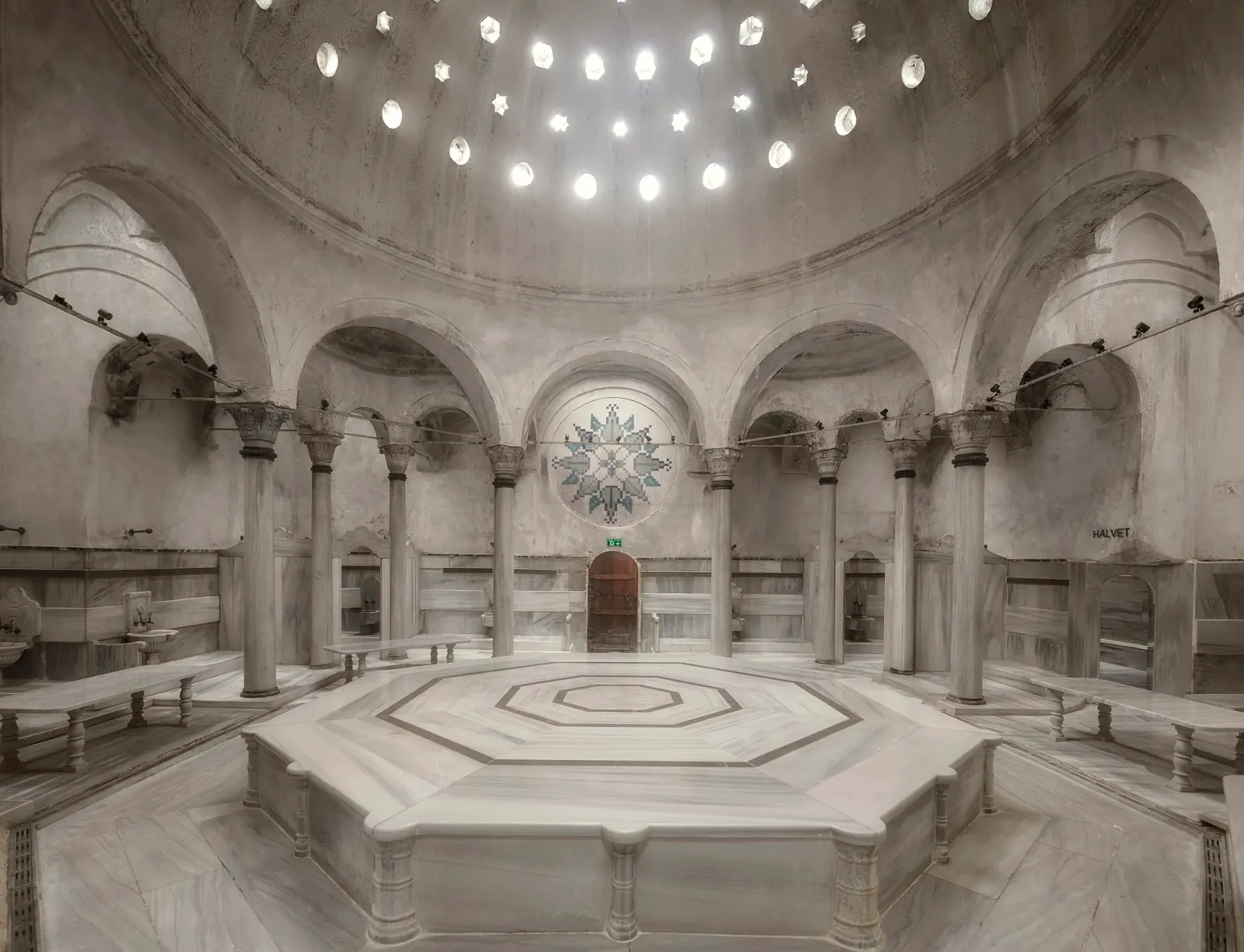
The last great Ottoman bath, and last because of a law rather than a fashion: soon after it opened in 1741, new hammam construction was banned in the city. Sultan Mahmud I had it built to endow his library inside Hagia Sophia; the bath earned the money that kept the books.
Unlike Kılıç Ali Paşa it has two complete baths under one roof, one for men and one for women, so there is no timetable to work around. The men's hot room is the grander of the two, with a colonnade of arches around the göbek taşı. It sits inside the same twenty-minute walk as the Sultanahmet monuments, so pair it with a morning there.